

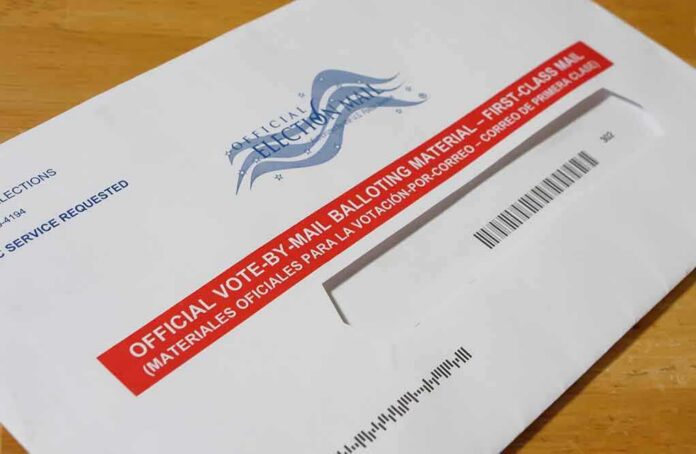
Two men named Dan Sullivan landed on the same Alaska ballot, and the paper trail points to a plan built on confusion.
Story Snapshot
- The New York Times reported aides and national Democrats recruited a second “Dan Sullivan.”
- Federal lawyers sued to guard against certifying a result tainted by voter confusion.
- Alaska’s governor ordered a state investigation into the dual-Sullivan ballot.
- Mary Peltola and Daniel J. Sullivan denied the recruitment claims.
How Two Sullivans Ended Up On One Ballot
Alaska voters faced an unusual choice: incumbent Senator Dan S. Sullivan and a retired teacher named Daniel J. Sullivan on the same ranked-choice ballot. National coverage described Daniel J. Sullivan as one of four candidates in the race. The Justice Department said the names could mislead voters in a tight count. The lawsuit asked a court to hold off certification if confusion proved decisive. The complaint’s thrust was simple: tricking voters crosses a bright line.
The New York Times reported that aides to Mary Peltola, campaign lawyers, and staff at the Democratic Senatorial Campaign Committee worked to recruit Daniel J. Sullivan and other similar-name prospects. The story cited a dozen sources, plus texts and documents. That evidence, if verified in court, would show planning, not coincidence. It would also explain why the second Sullivan stayed on the ballot after pressure. That is a serious charge because intent, not names alone, defines wrongdoing.
What The Government And The State Did Next
The Justice Department moved first. Federal lawyers went to court before Election Day. They asked for a narrow backstop: do not certify a loss for Senator Sullivan if confusion swung the outcome. Critics said that stance looked political. The department said it was protecting voters from a bait-and-switch. Alaska’s governor then directed state officials to investigate how two Daniel Sullivans reached the ballot, and whether any lines were crossed along the way.
State checks can pull emails, filings, and internal notes on ballot access. A clean process would show routine vetting and neutral handling. A tainted one would show coaching, payments, or legal maneuvers meant to keep the namesake in place. The public needs more than headlines. It needs records, dates, and who signed what. That is how you separate hard fact from campaign fog in a high-stakes race.
Denials, Disputes, And The Burden Of Proof
Mary Peltola rejected the New York Times account. She said she knew only about herself and the incumbent and that she was not trying to trick anyone. Daniel J. Sullivan said he had “zero” contact with her team and was not recruited by Democrats. Those statements should be weighed against the paper’s reported texts and documents once they surface. Until then, denials sit on one side and specific sourcing sits on the other.
Campaigns exist to win. But winning should not depend on voter confusion by design. Conservative common sense says every ballot should reflect a fair choice, not a shell game. If aides or outside groups hunted for a namesake to skim first-choice rankings, that shows intent to mislead. If the duplicate candidacy arose on its own and ran in good faith, that is politics, not fraud. The difference rests on proof, not spin.
Ranked-Choice Voting And The Confusion Question
Ranked-choice voting changes incentives. A decoy with a familiar name can soak up first-round rankings and shape transfers. That effect grows when two names look the same to busy voters. Federal lawyers warned that such confusion could cloud a razor-thin finish. The law does not ban same-name candidates. It does punish schemes that aim to mislead voters. That is why intent matters more than labels. Paper trails decide intent.
Alaska election officials also face a duty to design clear ballots and to educate voters. Good design can blunt gimmicks. Clear party tags and “incumbent” markers help voters match the person to the office. But design cannot cure a plan to deceive. If the Times’ reported messages show the goal was confusion, then election managers must escalate and courts must act. If not, then the controversy should end with sunlight and a lesson learned.
What To Watch To Know What’s True
Watch for filings that attach the alleged texts and documents. Look for depositions of campaign aides and national operatives that fix who made calls and why. Scan any payments from allied groups to consultants tied to recruiting. Track the state’s investigation for internal memos on ballot access and any reversals. Read the court’s take on the Justice Department’s narrow certification ask. Those items will turn noise into facts the public can trust.
Sources:
nytimes.com, cnbc.com, poynter.org, newsnationnow.com
© featuredheadlines.com 2026. All rights reserved.