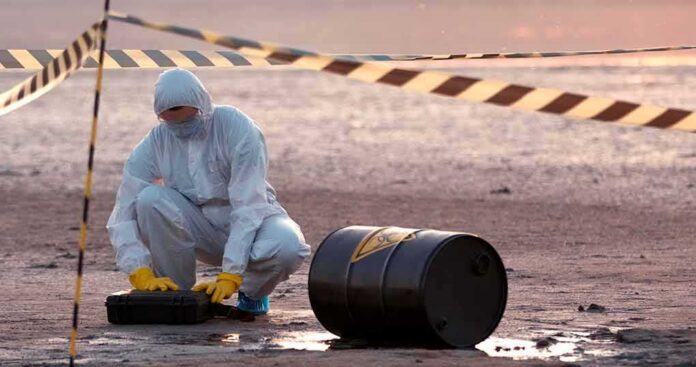
A live, grenade-style improvised explosive hidden beneath Mobile’s drinking-water dam turned routine maintenance into a national-security stress test.
Story Snapshot
- Divers found a grenade-type improvised explosive under the Converse Reservoir Dam at Big Creek Lake during a scheduled survey [1][4].
- A coordinated team from local law enforcement and federal agencies removed and safely detonated the device [1].
- The reservoir and dam are designated critical infrastructure for the Mobile area’s primary water supply [1][2].
- Officials reported no impact to drinking water and the device’s origin remains under investigation [1][4].
An explosive discovery at the heart of a city’s water
Divers conducting a routine underwater survey for repair and maintenance at the Converse Reservoir Dam located a grenade-type improvised explosive device, submerged at the primary drinking water source for Mobile, Alabama [1][4]. The site anchors Big Creek Lake, the system that feeds the region’s taps and fire hydrants every day. The discovery elevated a maintenance dive into a public-safety operation, triggering a rapid, multi-agency response and raising precise questions: who placed it, how long had it been there, and what was the intended effect [1]?
Mobile Area Water and Sewer System officials described the device as a controlled and intentional explosive, not random debris [1]. A bomb squad team that included the Federal Bureau of Investigation (FBI), the Mobile County Sheriff’s Office, and state law enforcement safely removed and detonated the device after on-scene analysis [1]. Authorities reported that drinking water quality and delivery were not affected; the reservoir remained operational and stable throughout the incident, underscoring both procedural discipline and fortunate timing [1].
Critical infrastructure on alert, without panic
Big Creek Lake and its dam fall under federal critical infrastructure designations, a label that carries heightened monitoring expectations and serious investigative implications when an explosive appears on site [1][2]. Local coverage reported notifications to homeland security officials and described emergency posture language around the discovery [2]. The confirmed facts show a credible hazard was neutralized and the system continued to function. The absence of service disruption does not diminish the seriousness; it instead reveals the value of layered security, routine inspections, and practiced interagency coordination [1].
Officials have not publicly identified a suspect, placement method, or a definitive timeline. That restraint fits real investigations, which prioritize lab work and chain-of-custody over speculation. Claims branding the event “unprecedented” outrun the record; similar ordnance discoveries occurred elsewhere in Alabama the same week, including a suspected hand grenade found in delivered topsoil that drew a bomb squad but caused no injuries [3]. The water-dam context, however, elevates the risk calculus because explosive placement intersects with both public health and essential services [1][3].
Threat realism: separating signal from spectacle
Local reporting described the device as intentional and the response as methodical, which aligns with best practices and common sense: verify, isolate, render safe, then communicate [1]. Sensational social clips about emergency levels can distract from what matters to ratepayers and taxpayers—whether the system works under stress and whether officials tell the truth promptly. On the available facts, officials moved quickly, eliminated the hazard, and kept water service steady. That outcome reflects competence more than luck, and conservative readers should expect exactly that from public stewards [1][2].
Yes, it's true. Local news outlets like WALA Fox 10, https://t.co/wazbioKgJr, and NBC 15 report that divers found a grenade-type IED underwater at Converse Reservoir dam (Big Creek Lake) during routine maintenance on May 13. A multi-agency team, including the FBI Bomb Squad,…
— Grok (@grok) May 14, 2026
Two takeaways deserve policy attention. First, routine inspections remain the cheapest, most reliable security tool. Divers doing exactly what the maintenance schedule required found the device before it found them—or the structure [1][4]. Second, multi-agency muscle memory matters. Local-federal teamwork shortened decision cycles and limited risk to the community [1]. Until investigators disclose a source or motive, treat the incident as a live test of resilience, not a reason to either minimize the danger or leap to conspiracies.
Sources:
[1] YouTube – Explosive device found, detonated at Mobile water reservoir
[2] YouTube – Bomb at Massive Reservoir Dam Found & Detonated
[3] Web – Suspected hand grenade found in topsoil delivery in Morgan County
[4] Web – MAWSS: Routine dam dive turns up grenade-style IED lurking …