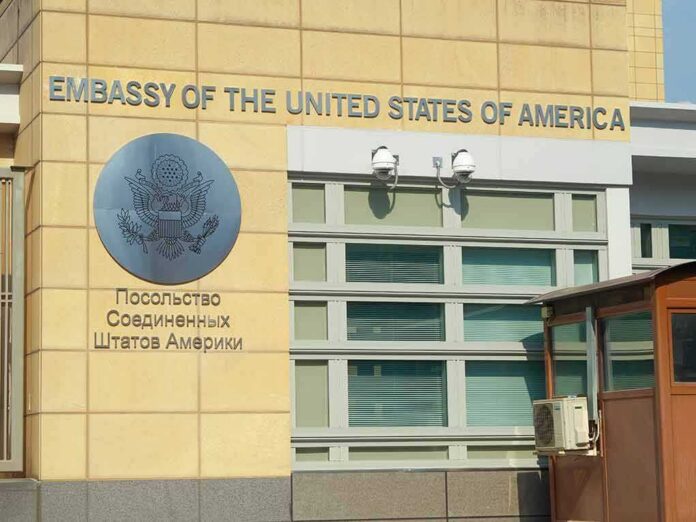
U.S. embassies across the Middle East pushed out the same urgent warning: be ready for sudden disruption.
At a Glance
- Multiple U.S. missions issued near-identical alerts across the region.
- Notices cite “tensions in the Middle East” and warn of rapid escalation.
- Americans were told to expect possible flight and airspace shutdowns.
- Coverage described the action as region-wide across at least 11 countries.
What Washington Told Americans, And Where
U.S. diplomatic posts from the Levant to the Gulf posted the same blunt message. The alerts said the security environment “remains complex with the potential for unforeseen escalation.” They urged Americans to keep a low profile, plan for fast changes, and prepare for travel disruptions. Embassy pages and official social posts in Jordan, the United Arab Emirates, Lebanon, Saudi Arabia, and Qatar carried that core language. The callouts about possible flight cancellations and airspace closures stood out for their directness.
The State Department’s network framed this as a region-wide posture, not a one-off country scare. News summaries listed posts across Israel, Saudi Arabia, Iraq, Kuwait, Lebanon, Jordan, Bahrain, the United Arab Emirates, and Qatar. That scope matters. It signals concern about spillover effects that do not respect borders or air corridors. It also shows how Washington uses synchronized phrasing to move citizens to act without revealing sensitive sources.
Why The Language Was So Explicit About Travel
The alerts pointed to a likely choke point: the skies. Advisories pressed Americans to expect “potential flight cancellations, airspace closures, and travel disruptions.” That is the softest way to say, plan your exit options now. Aviation is the first system to strain when missiles fly or militias lob drones. A closed runway in one capital ripples into missed connections and stranded families in three more. The wording matched the State Department’s playbook for fast-moving regional risk.
Local triggers shaped the tone. Coverage linked the atmosphere to Saudi-Houthi fighting and broader tension that could draw in multiple players. When armed groups test air defense systems or target oil and shipping, embassies do not wait to see which airport shuts first. They warn early, use standard language, and rely on Americans to connect the dots. That is sober, not vague. It protects citizens while guarding intelligence equities.
How To Read A Region-Wide Alert Like This
Standardized wording does not mean copy-and-paste panic. It means the U.S. government sees a shared risk profile across countries at once. The uniform text helps avoid confusion and keeps lawyers and security officers aligned. It also nudges the same actions everywhere: stay alert, register for embassy updates, hold a go-bag, keep your passport handy, and map ground routes to more than one airport. The message is simple: you may get less warning than you think.
Americans over 40 know this rhythm from past flare-ups. Phones buzz. Airlines hedge. A rumor becomes a notice to air missions. Then a real closure hits with little lead time. Conservative instincts say plan, do not panic. Fuel your car. Keep cash. Do not chase last-seat tickets at midnight. Wait for the next embassy update, but have a Plan B if the embassy cannot reach you. The alert’s plain talk on flights is your cue to set those plans now, not later.
What This Signals About U.S. Risk Tolerance
Washington chose clarity over comfort. That choice respects personal responsibility. The government cannot guarantee a seat out or compel a carrier to fly. It can tell you the risk picture and ask you to act. That lines up with common sense and American conservative values: inform the public, avoid alarmism, and let adults make decisions for their families. Region-wide alerts do that job. They shift time back to the traveler, which is the asset that matters most in a fast crisis.
The alert set also shows a maturing coordination across embassies. Cross-posted language on official pages and verified social accounts creates one track for facts and one clock for timing. That trims rumor, speeds decisions, and reduces mixed messages at the gate and on the road. The end state is simple: fewer surprises for Americans who pay attention, and less chaos if the region tips and airspace managers start to clamp down.
What To Do If You Or Family Are There Now
Check your embassy’s security alerts page each morning and night. Enroll in the Smart Traveler Enrollment Program if you have not already. Keep your phone charged and your documents on your person, not in a hotel safe. Confirm more than one route to the airport, and note ground border options to a calmer hub. Call your airline to understand rebooking rules if airspace closes. If you can leave early without hardship, consider it. Waiting rarely adds options in a tightening sky.
These alerts do not forecast doom. They flag a window when events can jump a border, shut a runway, or overwhelm a consular section. The government fired the starting gun. Your next move is yours.
Sources:
njsr.com.ng, yahoo.com, ae.usembassy.gov, avapress.com, ground.news, x.com
© featuredheadlines.com 2026. All rights reserved.