

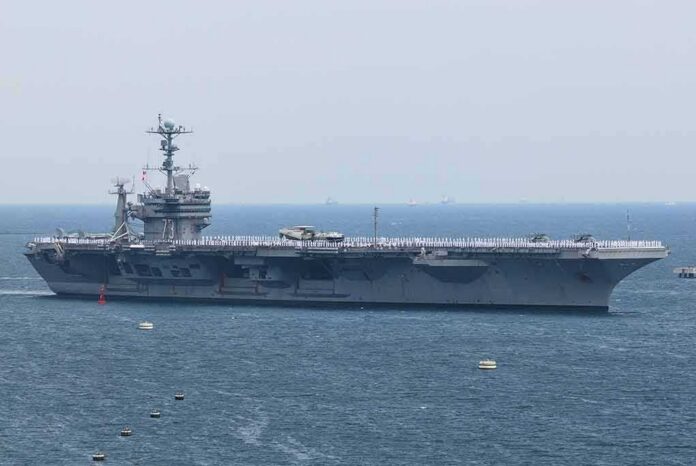
Within weeks of a shaky ceasefire, the United States found itself back in a shooting war with Iran over a 21‑mile strip of water that now risks dragging America into “major combat operations” all over again.
Story Snapshot
- Iran pushed for control over the Strait of Hormuz soon after a ceasefire deal, shattering hopes for a quick peace.
- The United States is already striking Iranian targets and clearing mines to keep oil and cargo moving through the strait.
- Fox News analyst General Jack Keane says Trump must return to full‑scale war to “finish what we started.”
- Research shows big escalations often serve politics and emotion more than clear strategy.
How The Strait Of Hormuz Pulled America Back Toward War
The Strait of Hormuz is a narrow chokepoint, just about 21 miles wide at its tightest, but it carries a huge share of the world’s oil. When Iran tried to restrict Western shipping in early 2026, the United States and Israel hit back with airstrikes that aimed to reopen the waterway. Iran then stepped up mining and attacks on ships, turning the strait into a live war zone and forcing Washington to decide how far it was willing to go.
American commanders answered with force. The United States began a major aerial campaign against Iranian targets along the strait, using bomber aircraft, attack helicopters, and Marines to hunt fast‑attack boats and clear mines. Reports describe bunker‑buster bombs hitting hardened missile sites and dozens of Iranian naval vessels destroyed, including minelayers that threatened shipping lanes. These moves were sold as defending “freedom of navigation,” but they also nudged the conflict back toward full‑scale war.
The Ceasefire That Fell Apart Almost As Soon As It Was Signed
Trump’s team tried to tap the brakes with a short ceasefire and new talks meant to pause the fighting and reopen the strait. Iran rejected a key ceasefire proposal on April 6, which made a real deal less likely before Trump’s public deadline. Central Command then announced a blockade on Iranian ports, enforcing new rules on ships entering and leaving Iran while insisting that non‑Iranian traffic through the strait remained free.
Within days, Iran pushed back again. Iranian officials warned that the Strait of Hormuz was a “red line” and vowed to resist until the end. U.S. officials later accused Iran of violating a memorandum of understanding that had paused some fighting, pointing to new attacks and efforts to gain leverage over the strait’s shipping lanes. That pattern—brief pause, new attacks, renewed anger—set the stage for voices arguing that diplomacy had already failed and only more force could work.
General Jack Keane’s Call To ‘Return To Full Combat Operations’
Into that moment stepped retired General Jack Keane, a senior strategic analyst on Fox News and a strong supporter of Trump’s Iran war. Keane has repeatedly argued that deals with Tehran only let the regime cheat and rebuild, while military action can break its power. After the ceasefire controversy, he said the United States was “on the cusp of returning to full‑throttle combat operations in Iran” and urged Trump to “finish what we started.”
Keane’s message is blunt: negotiations are a “mirage,” Iran has not changed “one iota,” and the United States should use force while the regime is at its weakest. He points to Iran’s moves in the strait—mines, drone strikes on cargo ships, and attempts to claim administrative control—as proof that Tehran only understands power. That fits with common‑sense conservative instincts: protect American interests, keep sea lanes open, and do not let a hostile regime push the United States around.
Is Major Combat Really The Only Way To Meet Trump’s Goals?
Trump’s stated goals are clear on paper: reopen the Strait of Hormuz, protect global shipping, and force Iran to accept new limits on its military and nuclear programs. Full‑scale combat operations might help crush Iranian naval capabilities and missile sites in the short term, and U.S. strikes have already hit dozens of targets from radar stations to Islamic Revolutionary Guard Corps boats. Keane and other hawks say military leaders are confident they can reach those goals through force if needed.
But deeper research into American war decisions tells a more cautious story. Analysts who study presidential war‑making say leaders often slide into escalation because of pride, domestic politics, and fear of looking weak, not because every option was tested. Big wars can also trigger more terrorism and civil unrest around the world, not less, when a foreign regime is hit hard. That risk runs against conservative values of stability, limited government overreach, and avoiding endless foreign entanglements.
Balancing Strength, Prudence, And Escalation Risks
Strategic studies lay out other tools that fit a strong but careful approach: targeted strikes, tight economic pressure, clear red lines, and smart use of alliances and global rules to control escalation. These options still show American strength but try to avoid the kind of “major combat operations” that drag on and drain attention from problems at home. They also respect a basic truth: once a war widens, it is much harder—and costlier—to pull it back.
Keane’s warning that a return to full combat is “inevitable” speaks to real anger at Iran’s actions and a desire to protect American power. Yet inevitability is not a law of physics; it is a political choice. For readers who value both muscular defense and fiscal and constitutional restraint, the key question is simple: does another big war with Iran truly serve long‑term American interests, or does it mainly satisfy short‑term pressure and TV‑driven emotions?
Sources:
mediaite.com, en.wikipedia.org, youtube.com, cnn.com, nytimes.com, aljazeera.com, understandingwar.org, foxnews.com, mediamatters.org, foxbusiness.com, wgi.world, media.defense.gov, pomeps.org
© featuredheadlines.com 2026. All rights reserved.