
France built a playbook to put soldiers on its own streets—and it keeps the keys within reach.
At a Glance
- France’s Operation Sentinelle put up to 10,000 troops at home to deter terror after 2015.
- Retired generals warned in 2021 that Islamism and violence could push France toward civil conflict.
- Recent spikes in the threat level triggered thousands of troops mobilized for site protection.
- Officials deny tanks or combat units were used against student protesters; police led crowd control.
The Standing Mechanism To Put Boots On Boulevards
French leaders do not need to invent a new plan to deploy troops on home soil. They already run one. The Defence Ministry describes Operation Sentinelle as a standing mission to protect the national territory against terror threats, with patrols at transit hubs, worship sites, and public spaces. At its peak, Sentinelle involved about 10,000 soldiers and gendarmes on French soil after the 2015 attacks. That scale signals a government willing to use the military, carefully, inside national borders.
Raising the domestic threat level has real teeth. When authorities move to the highest alert, they surge forces to deter follow-on strikes, secure events, and reassure the public. Reporting described a mobilization of 7,000 troops tied to a heightened alert posture. That step matches the Sentinelle logic: soldiers protect fixed sites while police handle arrests and crowd work. The model is not martial law. It is a layered security stack tuned to terror risk, not day-to-day policing.
The Generals’ Letters And The Civil-War Drumbeat
Warnings from retired officers added heat to an already tense climate. An open letter in 2021 said France was “disintegrating” under the pressure of Islamism and violence, and it suggested the army could be forced to act if leaders failed. Media counted thousands of signatories and framed the message as a shock to the political class. On substance, these letters carried complaints, not orders. They showed anxiety within a veteran cohort, not a chain-of-command plan.
That distinction matters. Conservative common sense draws a line between public alarms and lawful authority. The letters channel fear of social fracture and anger at soft responses to street violence. But they do not equal a green light for domestic force beyond the law. The stronger case remains what the government already authorizes: site protection under Sentinelle, matched with police-led public order. That is how a constitutional state uses force without breaking itself.
What The State Did—and Did Not—Do In The Latest Unrest
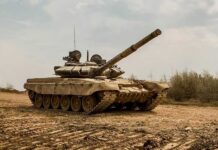
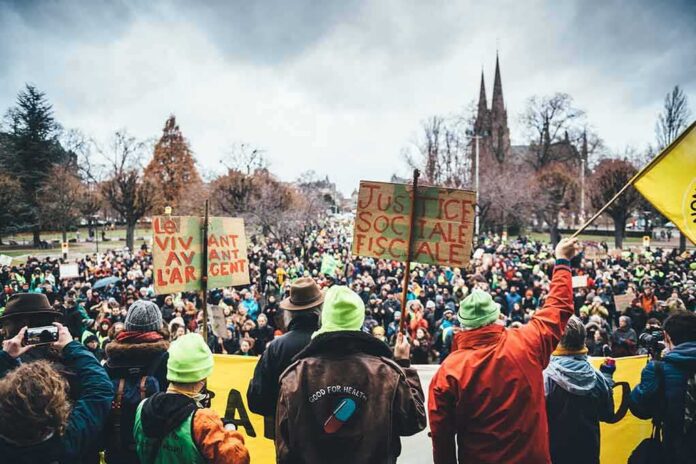
Officials rejected claims that the army rolled tanks against student protesters. France 24 reported no such deployment, aligning with the long pattern that keeps the Interior Ministry in charge of protests and riots. When crowds block schools or attack property, written orders direct police to clear the way and stop the violence while protecting peaceful speech. That is the core of domestic response. Soldiers, when visible, guard targets that terrorists prize, like stations and synagogues.
Some commentators link unrest to organized Islamist or far-left operations; others point to school decay and uneven chances for poor students. Associated Press coverage traced the spark to complaints about run-down buildings, staff shortages, and hard paths to university. These factors can fuel rage that bad actors exploit. But exploitation is not proof of control. The clean claim is narrower and stronger: France accepted that internal threats can spike fast, so it built a legal on-ramp for troops to protect, not to police.
The Real Threshold For Calling Out The Army
France can escalate if terror risks demand it. The Defence Ministry’s regular bulletins show a normalized domestic mission with uniformed patrols, coordinated with police and gendarmes, and limited rules of engagement. That is not the same as deploying infantry to crush protests. It is closer to hardening a city with armed sentries. When the alert rises, the number of sentries rises. When the alert falls, they draw down. The lever exists and has been pulled before.
Would troops restore calm faster if riots spiral? The record says police remain the lead. In 2023, authorities surged tens of thousands of security personnel and made several thousand arrests, yet did not hand neighborhoods to the army. That split of duties aligns with core freedoms and with prudence. Soldiers deter terrorists; police enforce the street. When leaders respect that line, they preserve order without turning every protest into a battlefield.
What To Watch Next
Keep an eye on three signals. First, threat posture. If leaders raise the alert, expect more uniforms at stations and public sites. Second, tasking language. If bulletins cite protection of sensitive sites, that is Sentinelle. If they cite crowd control, that would mark a break from the norm. Third, Interior Ministry moves. Orders to clear blockades and stop vandalism show police in charge, which preserves civil balance while force stays focused and legal.
The bottom line: France has the muscle memory to place soldiers at home without declaring war on its own citizens. The state uses that power to harden targets and calm nerves when terror risk rises. That is the guardrail. Calls to send in the army against “barbarians” make headlines. The actual system is colder and smarter: police for crowds, soldiers for terror, and a narrow door between them—kept shut unless the threat kicks it open.
Sources:
pjmedia.com, min.news, france24.com, organiser.org, blogs.lse.ac.uk, meforum.org, en.wikipedia.org
© featuredheadlines.com 2026. All rights reserved.