

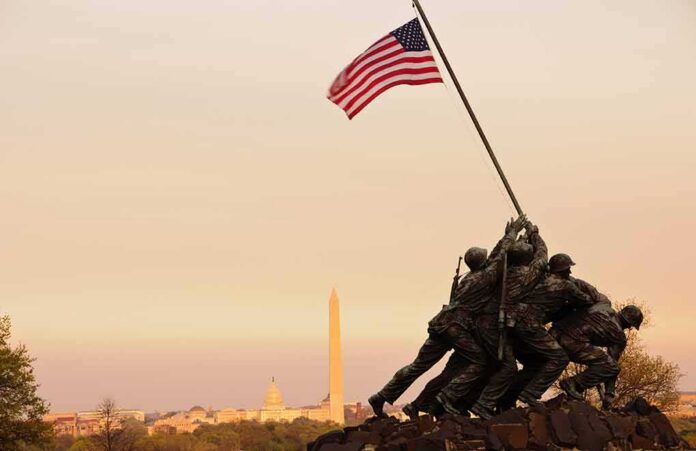
Police say they caught a man swinging a sledgehammer as the Iwo Jima memorial’s stone head hit the ground.
Story Snapshot
- Officers detained a suspect they say was actively smashing the Quantico Iwo Jima memorial with a sledgehammer.
- The statue’s damage included a decapitated Marine figure and other facial and structural harm.
- Felony charges include destruction of property and injury to a monument.
- A judge later granted a $2,500 bond after initial hold, despite an immigration detainer report.
Police Account Describes On-Scene Arrest And Severe Damage
Prince William County Police reported a late-night call to the Iwo Jima memorial near Marine Corps Base Quantico. Officers say they found Miguel Alonso Maldonado Soriano striking the limestone statue with a sledgehammer and detained him without incident. The damage was stark and visible. One Marine figure’s head was removed. Another face and sections of the monument were hit. Police and local outlets described the harm as extensive and shocking to visitors and veterans alike.
Authorities charged Soriano with felony destruction of property, trespass with intent to damage property, and felony injury to a monument, aligning the counts with what officers say they witnessed. Reports tied the damage estimate to “hundreds of thousands of dollars,” underscoring the scale of repair and conservation needs. The Marine Corps Heritage Foundation soon began a fundraising push to restore the memorial, a sign of both urgency and cost. Police did not offer a motive at the time of reporting.
Bond Decision And The Pretrial Risk Lens
Initial custody ended when Chief Judge Petula Metzler granted Soriano a $2,500 bond after prosecutors argued to keep him jailed, according to published accounts. Reports also noted an immigration detainer, which immigration authorities can use to request transfer if a person would otherwise be released from local custody. Virginia courts base bond on risk of flight and danger, not emotions or headlines. State guidance emphasizes an individualized assessment supported by pretrial tools and a plan for supervision.
Conservative instincts bristle at a low bond when a revered military memorial is shattered. That reaction tracks with common sense respect for the Marines, property rights, and law and order. The legal standard, however, asks whether conditions can manage risk until trial. Damage, even grave damage, is not the sole factor. Judges weigh prior record, ties to the area, compliance history, and whether release terms can protect the community and ensure court appearances.
Why Military Memorials Draw Tougher Laws And Fierce Public Response
Lawmakers have long treated attacks on military monuments as more than routine vandalism. Federal law specifically guards veterans’ memorials and allows felony penalties for willful damage in certain settings, reflecting the civic value those symbols carry. Other federal provisions protect monuments and memorial structures on designated federal lands and military parks, reinforcing that these sites get special care in the law. The strong reaction after Quantico shows why: these memorials honor sacrifice and bind communities across generations.
A $2,500 bond for smashing a memorial to the Marines of Iwo Jima, with an ICE detainer reportedly on him, is hard to explain. Federal charges don't mean much if he's gone before trial. Honor the detainer.
— Jony Q (@JonyQ04) October 27, 2026
The Marine Corps heritage community moved fast after the damage. The Marine Corps Heritage Foundation launched a restoration effort and sought public support, signaling that a careful, likely costly conservation process lies ahead. Stone conservators often must stabilize fractures, replace missing elements, and match weathered finishes. That work takes time, expertise, and money. While police-linked estimates pegged costs in the hundreds of thousands, a final bill will depend on technical assessments and bids.
What Comes Next: Charges, Restoration, And Community Watch
The criminal case will move through preliminary hearings and, if advanced, trial. Prosecutors must prove the charged offenses based on the reported on-scene arrest, the tool recovered, and the visible damage. The court will revisit release as needed if risk changes. On the ground, the foundation and local partners will chart restoration, likely with staged work to protect the statue before full repair. The memorial will again stand whole. The question is how soon, and at what financial and civic cost.
Sources:
redstate.com, people.com, princewilliamtimes.com, wtvr.com, wsfa.com, stripes.com, abc6onyourside.com, potomaclocal.com, militarytimes.com, congress.gov
© featuredheadlines.com 2026. All rights reserved.