

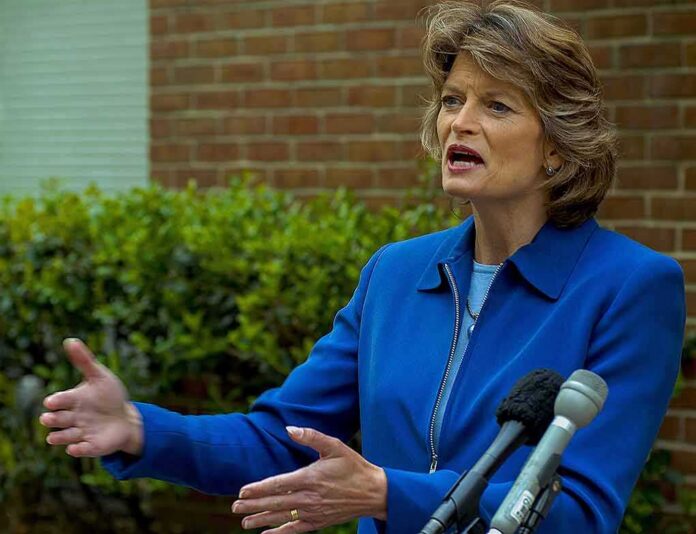
Lisa Murkowski, Alaska’s senior Republican senator, endorsed Democrat Jonathan Kreiss-Tomkins for governor, and she did it on camera with no hedging.
Story Snapshot
- Murkowski said she is endorsing Jonathan Kreiss-Tomkins and praised his vision for Alaska.
- The endorsement arrived by interview and a campaign release from the Democrat’s team.
- The move fits Alaska’s candidate-first, cross-party habits more than a party break.
- Three former governors also lined up behind Kreiss-Tomkins, raising the stakes.
What Murkowski said and how she said it
Lisa Murkowski told Alaska’s News Source that she is endorsing Jonathan Kreiss-Tomkins. She called him a young Alaskan with the perspective the state needs right now. The Democrat’s campaign also sent a written statement from Murkowski to reporters. The release stressed bipartisanship and a focus on results over party labels. The joint on-air and on-paper rollout signals planning, not a stray comment. It also places her name clearly on the line with voters who will remember.
Jonathan Kreiss-Tomkins is a former state lawmaker from Sitka. His pitch has leaned on competence, pragmatism, and tangible results. Murkowski’s words matched that frame. She talked about a future not trapped by party fights and a need for problem solvers. That message fits Alaska’s culture. Voters there reward people who bring home wins on energy, fishing, and rural services, even if they cross party lines to do it. Murkowski has worked that lane for years.
Why this fits Alaska’s political DNA
Alaska runs on ranked-choice voting and a long memory for independent streaks. Voters split tickets. Candidates carve personal brands. Murkowski has crossed lines before. She backed Democrat Mary Peltola for the United States House and also backed Republican Senator Dan Sullivan in the same general era. That does not make this small. It shows a pattern: support for people she thinks will deliver for the state, not blind party loyalty. That is Alaska politics at work, not a fluke.
The endorsement did not land alone. Three former governors also backed Kreiss-Tomkins. The list spans parties and signals a broad institutional bet on the Democrat against multiple Republicans on the ballot. That coalition gives him instant credibility with older voters and moderates who value stability. It also hands him a powerful earned-media wave in a state where attention can be hard to command. The combined effect is momentum, name recognition, and a permission slip for ticket splitters.
How much endorsements move votes
Endorsements can help, but they cut both ways. Research on political cues shows that leaders can sway supporters, yet push opponents away. One large set of experiments during the pandemic found endorsements sometimes sparked backlash or had little effect, depending on the audience. That lesson travels here. Murkowski may draw moderates toward Kreiss-Tomkins. She may also anger strong partisans who already disliked her cross-party brand. Net impact depends on who turns out and how ranked-choice tallies flow.
Alaska’s system rewards broad acceptability. A candidate can win by being many voters’ second choice. A Murkowski nod can make Kreiss-Tomkins that safe second for center-right voters who want a steady hand on oil, fisheries, and rural investment but feel split among several Republicans. From a conservative, common-sense view, that incentive structure asks one question: who can govern well and respect local industry? Murkowski signaled she believes Kreiss-Tomkins clears that bar. Voters will test that claim at the ballot box.
What this means for Republicans and for governance
Alaska Republicans now face a simple math problem. A fractured field helps a disciplined opponent. Murkowski’s move nudges pragmatic Republicans and independents to consolidate behind Kreiss-Tomkins while hardliners split. That is not a moral lecture; it is a turnout and ranking reality. If Republicans want a conservative agenda on resource development, public safety, and cost of living, they must unify in a system built to punish division. That is the strategic rub her endorsement exposes.
Lisa Murkowski is Alaska's senior senator and a Republican. On Tuesday she endorsed the Democrat for governor, Jonathan Kreiss-Tomkins, a former state representative from Sitka. Her words: "Our future is too important to be hamstrung by partisan divisions."
President Trump… pic.twitter.com/5Hltdz3gCE
— Jewels Jones ® (@JewelsJonesLive) October 28, 2026
Murkowski’s critics will call this disloyal. Her supporters will call it leadership. The facts show she has long judged candidates on a case-by-case basis, and Alaska voters have rewarded her independence more than once. The near-term question is practical. Does this shake loose enough moderate votes and second-choice rankings to change the race’s path? The answer will turn on ground game, early votes, and whether Republicans rally around one standard-bearer in time to matter.
Sources:
yahoo.com, alaskapublic.org, alaskasnewssource.com, thehill.com, juneauindependent.com
© featuredheadlines.com 2026. All rights reserved.