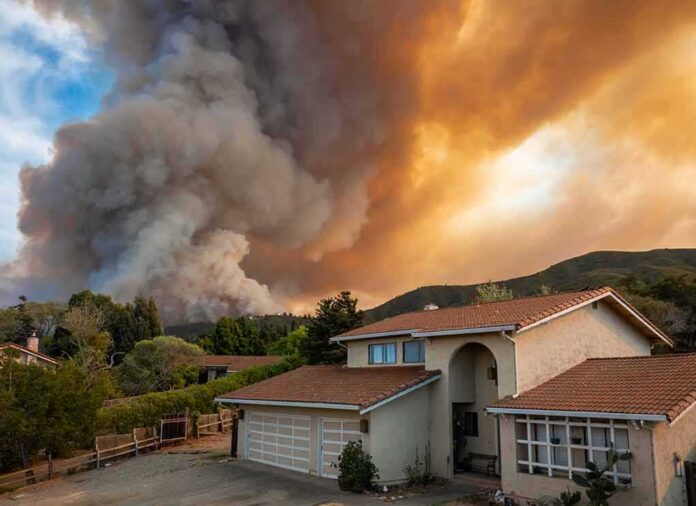
When Spokane’s wildfire alerts jumped to “Leave NOW — this may be your only notice,” thousands learned how fast a normal Saturday can turn into a fight for your life.
Story Snapshot
- Wildfires near Spokane and across Washington triggered Level 3 “Go Now” evacuation orders for thousands of people.
- Strong winds, dry fuels, and red flag fire warnings turned scattered blazes into a fast-moving, statewide emergency.
- State leaders declared an emergency as more than 200,000 acres burned and power failed for tens of thousands.
- Local deputies, firefighters, and volunteers raced door to door, proving that in a crisis, government orders only work when real people act.
When the evacuation text on your phone is not a drill
Residents around Spokane did not get a gentle warning; they got blunt orders that said “Leave NOW! This may be your only notice.” Swaths of the city and nearby communities were marked Level 3, the highest danger rating, which means leave immediately or risk your life. Spokane County alerts covered neighborhoods from Medical Lake and Four Lakes to zones on the city’s edge, as flames pushed toward populated areas. For more than 11,000 people, the choice was simple but brutal: walk out now, or risk never walking out at all.
Evacuations did not unfold slowly over a week; they expanded hour by hour as winds drove the fire in unpredictable ways. One afternoon, a neighborhood was at Level 1, told to be aware and ready; that night, parts of Spokane were under Level 3 “Go Now” orders after the fire jumped lines and spotted ahead. Deputies ran from house to house in towns like Medical Lake, pushing people to their cars as smoke thickened and embers landed in yards. The message was clear: leave now, argue later.
Why the fires exploded instead of creeping along
The blaze near Spokane did not grow because someone lit a match on a calm, wet day. It ignited into a major crisis under what officials called “perilously dry and windy conditions.” The National Weather Service warned that 20 to 30 mile-per-hour winds, with gusts up to 40, would combine with low humidity and dry vegetation to create perfect wildfire fuel. A red flag warning — the fire weather version of a storm siren — covered broad swaths of central and eastern Washington. When that kind of wind hits grass, brush, and timber that have baked for months, fires do not wait for paperwork to catch up.
This was not a freak one-day event, either. Washington’s broader fire season had been flagged as “above average risk” for much of the state, thanks to heat, lack of rain, and stressed fuels. Reporting on Spokane County conditions showed rainfall running well below normal, with dry cold fronts bringing more wind than relief. Climate researchers who study the region warn that hotter, drier summers are turning the Spokane area into a place where extreme fire danger days are more common, not rare. That does not mean every fire is caused by climate change, but common sense says ignoring that trend is like ignoring rust on the brakes of your family truck.
From rural fields to city blocks: a statewide emergency takes shape
While Spokane grabbed headlines, fires were burning across eastern Washington, forcing evacuations in small towns that most people only see on a highway sign. Residents in Beverly and Schwana were ordered to “Go Now” as new fires came over ridges and down into river country. Level 3 orders hit parts of Whitman County, where Winona’s few dozen residents had to leave their homes as a 5,000-acre fire reached the edge of town. Power companies cut electricity for tens of thousands to prevent sparks from lines, trading short-term discomfort for long-term survival.
Wildfires across more than a quarter of a million acres in Washington state have prompted widespread evacuations and power outages in the Spokane area, state officials said on Saturday evening.
About 4,000 people were fighting more than a dozen fires throughout the state, Dave… pic.twitter.com/osSya9pBNB
— The Morning (@TheMorningLK) August 2, 2026
As acreage climbed above 200,000 in at least a dozen large fires, Governor Bob Ferguson declared a statewide emergency and a burn ban to slow new ignitions. The Washington State Emergency Management Division reported more than 60,000 people without power while thousands fled threatened areas. For once, the state did what many conservatives demand in real disasters: it focused on core duties, not social experiments. Leaders backed law enforcement, activated response plans, and let firefighters and the National Guard do the job only they can do.
What Level 3 “Go Now” really means for families and freedom
The three-level evacuation system sounds bureaucratic until you place your kids in the back seat with a wall of smoke ahead. Level 1 means be ready. Level 2 means get set to leave at a moment’s notice. Level 3 means go now or risk dying in your own driveway. Some people naturally resist any order from government, and healthy skepticism has its place. But a sheriff pounding on doors while flames chew through dry timber is not playing politics; he is trying to save people who might assume “it won’t reach my street.”
There is a tension here that matters. Americans value property rights and local control. They distrust sweeping narratives that blame every weather event on the climate buzzword of the week. But this case does not require blind faith. It asks one simple question: when the sky turns orange, the wind is at 30 miles per hour, and firefighters say “Leave now,” are we going to debate talking points or grab the go-bag and help our neighbors get out? In Spokane, the people who treated that alert as real, not optional, are the ones still around to tell the story.
Sources:
khq.com, nbcnews.com, timesnownews.com, kiro7.com, youtube.com, fox13seattle.com, drought.gov, kitsapsun.com, vanguardngr.com, nytimes.com, en.wikipedia.org, spokaneclimateproject.org, washingtonexaminer.com
© featuredheadlines.com 2026. All rights reserved.