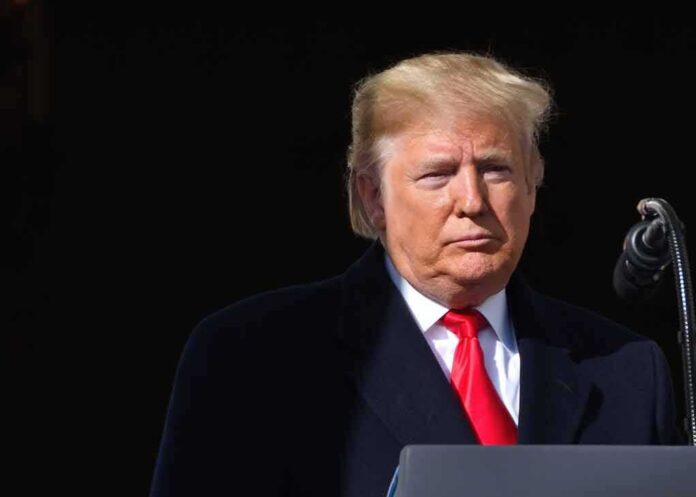
Donald Trump turned a Kentucky primary fight into a loyalty test, and Thomas Massie did not blink.
Quick Take
- Trump called for Massie to be pushed out of office after the congressman opposed a short-term government funding bill [1].
- Trump backed a challenger and used the primary defeat of Senator Bill Cassidy as a warning shot to other Republicans .
- Massie framed his resistance as a matter of principle, not party obedience, and said he votes his conscience [2].
- The clash exposes a familiar Republican divide: Trump-aligned discipline versus limited-government independence [1].
Why This Feud Matters Beyond Kentucky
Trump’s attack on Massie matters because it was not just a personal insult. It was a public order to Republican voters: replace a member of Congress who broke ranks. That kind of command turns a primary into a referendum on obedience, not policy. Massie’s refusal to back the short-term funding bill gave Trump the opening, but the real issue is larger. Republicans now have to decide whether dissent still has a home inside the party [1].
Massie has spent years casting himself as the kind of Republican who does not vote like a machine. He has said he usually supports the party but reserves the right to vote against it when his judgment demands it [2]. That posture may irritate Trump, but it also explains why Massie has survived in a district that has tolerated his independent streak. For voters who value constitutional restraint and limited government, that kind of consistency still has appeal.
Trump’s Strategy: Make One Example, Warn the Rest
Trump’s messaging followed a familiar pattern. He did not merely criticize Massie’s vote; he tried to define Massie as unworthy of office, calling him weak, disloyal, and unreliable . He also tied Massie’s fate to the fate of Senator Bill Cassidy, who lost his primary fight in Louisiana, using that result as proof that Republican voters should punish defections . This is not subtle politics. It is pressure, applied in public, with the expectation that fear does the rest.
The political calculation is easy to see. If Trump can knock down one stubborn Republican after another, the rest of the party gets the message before the next hard vote arrives. That is why the Massie race matters even to people outside Kentucky. Every primary threat becomes a warning label for lawmakers who might otherwise resist spending bills, foreign policy moves, or executive overreach. The goal is not persuasion. The goal is discipline.
Massie’s Case: Principles, Not Party Choreography
Massie’s defense rests on a simple proposition: elected officials should not surrender judgment to a party boss. His allies argue that his opposition to the funding bill fits a broader record of skepticism toward wasteful spending and rushed deals [2]. That argument resonates with conservatives who still believe the federal government should be restrained, not celebrated. It also highlights the uncomfortable truth that a party can gain energy from strong leadership and still lose something essential when every disagreement becomes disloyalty.
Massie also benefits from Trump’s own style. Every attack can generate attention, money, and sympathy from voters who dislike being told how to vote. Massie has openly suggested that Trump’s posts help his fundraising [2]. That is the paradox of modern Republican politics: the same force that can crush dissent can also make the dissenter look like the last adult in the room. If Trump overplays the threat, he may strengthen the target he wants gone.
The Bigger Republican Divide Hiding in Plain Sight
This fight is not really about one funding bill. It is about whether the Republican Party is becoming a command structure built around personal loyalty or a coalition that still tolerates internal resistance. Trump’s approach rewards loyalty above all else, while Massie represents the older conservative instinct that says Washington should be smaller, less impulsive, and less theatrical [1]. Those two instincts can coexist for a while. Eventually, they collide. Kentucky is where the collision landed this time.
The conservative common-sense test is straightforward: voters should judge Massie on his record, not on whether he flatters Trump. If a congressman votes against a bill for reasons his constituents understand and accept, the ballot box should be the answer. If Trump’s backers want to defeat him, they should do it with arguments, not just intimidation. That standard protects accountability without turning every Republican primary into a purity purge. And that is exactly what makes this race worth watching.
Sources:
[1] YouTube – Trump vows to help oust Republican Rep. Thomas Massie of Kentucky
[2] Web – Scoop: Trump launches MAGA PAC in effort to oust Rep. Massie …