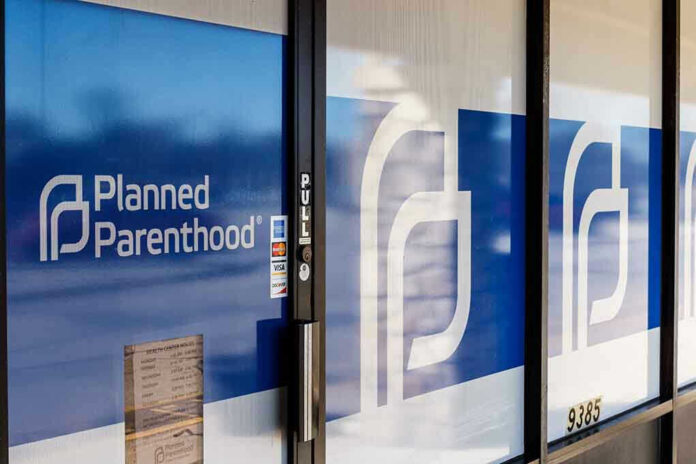
A federal court ruling just delivered a major win for pro-life advocates by allowing the Trump-era provision to cut off Medicaid funding to Planned Parenthood, igniting fierce debate over the future of abortion funding and executive power.
Story Snapshot
- The First Circuit Court of Appeals allowed enforcement of a Trump-backed law defunding Planned Parenthood for one year.
- The decision reverses lower court injunctions and is hailed as a victory by pro-life and fiscal conservatives.
- Planned Parenthood and several states are actively fighting the provision in federal court, citing risks to healthcare access for low-income patients.
- This case reflects broader post-Dobbs legal battles over federal and state authority on abortion policy.
Appeals Court Greenlights Defunding of Planned Parenthood
On September 11, 2025, the U.S. Court of Appeals for the First Circuit granted a stay on preliminary injunctions, immediately allowing the Trump administration’s provision to strip Medicaid funding from Planned Parenthood and similar providers for one year. This decision reverses previous district court rulings from July and marks a clear victory for President Donald Trump’s legislative agenda, aligning with long-standing conservative priorities to prevent taxpayer money from supporting abortion providers. The legal battle highlights ongoing conflict between federal authority and judicial oversight.
The provision, part of the One Big Beautiful Bill Act, specifically targets health providers that offer abortion services, effectively singling out Planned Parenthood, the nation’s largest abortion provider. This move comes amidst a highly polarized national debate on abortion policy in the wake of the Supreme Court’s Dobbs decision, which returned authority over abortion regulation to individual states. This federal action is viewed by many on the right as a necessary step to uphold the intent of laws like the Hyde Amendment, which already restricts federal spending on abortion, but had left open indirect funding channels through Medicaid reimbursements.
Legal and Political Fallout: Ongoing Litigation and Polarization
Planned Parenthood, joined by 22 state attorneys general and the governor of Pennsylvania, is aggressively challenging the defunding measure in federal courts. While pro-life organizations, such as Susan B. Anthony Pro-Life America, celebrated the ruling as a win for taxpayers and constitutional values, pro-choice groups, including the National Abortion Federation, argue that it will harm vulnerable communities by cutting off access to essential healthcare services like cancer screenings and contraception. Statements from both camps underscore the deepening political and social divide over reproductive rights and government spending priorities.
While the stay is currently limited to one year, its immediate impact is substantial. Medicaid funding for Planned Parenthood is now suspended in affected states, creating uncertainty for low-income patients who rely on these services. Legal experts note that the outcome of these ongoing lawsuits could set significant precedents for future federal and state actions on reproductive healthcare funding, reinforcing abortion as a central issue in the 2026 election cycle. The litigation’s progress is being closely watched by advocates on both sides, as any further court decisions could reshape the national landscape for years to come.
Wider Implications for Healthcare, Policy, and Conservative Values
For many conservatives, the court’s decision represents a long-awaited pushback against what they view as judicial activism and the misuse of taxpayer funds for controversial programs. Pro-life advocates argue that the ruling protects both the unborn and the integrity of federal spending, emphasizing that Americans should not be forced to subsidize abortion providers through Medicaid. Meanwhile, Planned Parenthood faces immediate financial strain and potential service reductions, raising questions about alternative sources of care for low-income and rural patients. The case exemplifies the challenges of balancing constitutional protections, executive authority, and competing visions for America’s healthcare future.
Biden appeals court torpedoes Obama judge's injunction, clears Trump administration to cut off Planned Parenthood https://t.co/AOCAmkyfhA pic.twitter.com/QiMJmjiUx6
— TheBlaze (@theblaze) September 12, 2025
The broader healthcare sector may also feel ripple effects, as other providers weigh the risks of offering abortion services against potential funding losses. Economic impacts could include increased pressure on state health systems if displaced patients seek care elsewhere. Socially, the provision’s enforcement may disproportionately affect marginalized communities, while politically, it sends a message that the federal government—under conservative leadership—is willing to assert its authority to defend traditional values and limit government overreach. As the legal and legislative battles continue, the outcome will have lasting consequences for the intersection of reproductive rights, public funding, and constitutional governance.
Sources:
Appeals court allows Planned Parenthood defunding to proceed—for now
Court allows Trump administration to end Planned Parenthood’s Medicaid funding
Victory: First Circuit Grants Stay Against Planned Parenthood Injunctions
Litigation Involving Reproductive Health and Rights in the Federal Courts
National Abortion Federation Statement on Court Ruling to Defund Planned Parenthood
The First Circuit Court Allows Defund Planned Parenthood Provision to Take Effect