

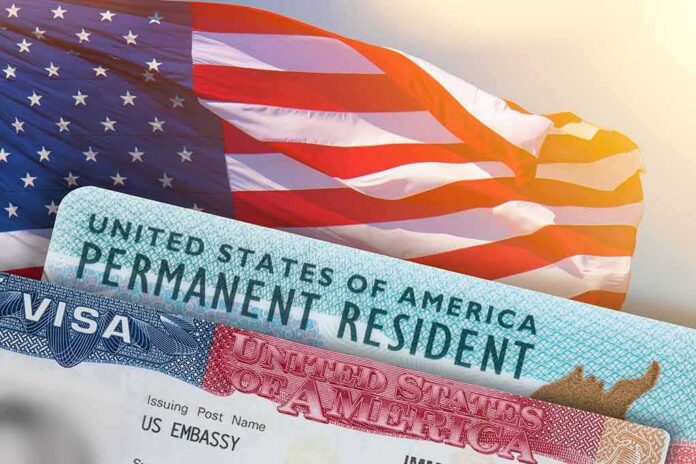
Washington signaled a rare, high-stakes choice: the United States will issue visas to Flávio Bolsonaro and his family even as Brazil’s top court ordered him to hand over his passports.
Story Snapshot
- A senior State Department official said visas will be issued to Flávio Bolsonaro and his family.
- Reports say President Trump approved allowing entry after Bolsonaro’s election loss.
- Brazil’s Supreme Court ordered Bolsonaro to surrender passports and barred his departure.
- Investigations in Brazil continue; no U.S. charges or visa category was disclosed.
What Washington Decided And Why It Matters
A senior State Department official said the United States will issue visas to Flávio Bolsonaro and his family. The official did not name the visa types or terms. The statement came as news outlets described confusion over Bolsonaro’s location and travel documents. Reports also said President Trump approved allowing entry, which signals a deliberate policy choice, not a bureaucratic shrug. That choice lands at the intersection of immigration authority and foreign policy messaging, where small words carry big consequences.
The decision arrives while Brazil’s Supreme Court ordered Bolsonaro to surrender his passports within 24 hours and not leave the country. Brazilian outlets also reported the cancellation of his ordinary and diplomatic passports after he missed the deadline. This clash sets up a diplomatic test. The United States controls its borders. Brazil enforces its court orders. Each side can justify its move. Both cannot control how the other’s public reads the moment.
The Legal Fine Print That Shapes Big Headlines
United States visa law treats case records as confidential. The Immigration and Nationality Act bars public release of most visa details, which explains the vagueness around categories and conditions. That secrecy is normal, not a cover-up. It also means critics must argue from outcomes, not documents. Congress has also armed the State Department with tools to deny entry to foreign officials and their families over major corruption concerns, and to grant waivers when a national interest outweighs those concerns. Those levers allow hard calls, and controversy follows every pull.
Brazil’s investigations into Bolsonaro include money laundering and corruption allegations. News reports tie him to probes touching large sums and key associates. These are still allegations, not convictions, under Brazilian process. The United States did not announce a finding on his guilt or innocence. Issuing a visa does not clear a person’s name. It signals that, for now, the admission standard and policy balance did not bar entry. That nuance gets lost in the noise, but it is the ground truth.
Did He Flee, Or Was He Cleared To Travel?
Reports on Bolsonaro’s path to the United States conflict. Some say he arrived after the passport order. Another report cites a police source saying there was no formal record of departure after cancellation. Allies suggested family members could have used Italian passports for short stays, while United States visas would enable longer residence, but officials did not confirm the travel documents or the exact visa class. The fog of paperwork helps no one, yet it also reflects routine privacy rules that the law demands.
State Department says it will give US visas to defeated Brazilian presidential candidate Fl vio Bolsonaro and his family, reports AP. pic.twitter.com/Mjye0ujLBz
— Press Trust of India (@PTI_News) October 28, 2026
Brazil’s President Luiz Inácio Lula da Silva blasted Bolsonaro’s departure. He said someone who leaves “fears something” and called it shameful. That is sharp politics and a clear message at home. From an American conservative view, the stronger argument rests on process and sovereignty. The United States should set its own entry terms, weigh allied concerns, and avoid letting foreign courts dictate American borders. That stance respects both anti-corruption goals and national control.
What To Watch Next
Expect pressure for clarity on three fronts. First, whether the United States used a standard visa or a policy waiver that accounts for Brazil’s probes. Second, whether United States and Brazilian agencies share information that could change future status, including any visa revocation, which also lives behind confidentiality rules. Third, whether Bolsonaro’s case becomes a broader test of how Washington treats foreign officials who face serious but unresolved charges abroad. These answers will shape how allies read America’s word and weight.
Sources:
facebook.com, bbc.com, npr.org, dw.com, afp.com, edition.cnn.com, politico.com, bbc.co.uk, thecanadianpressnews.ca, bahianoticias.com.br, folhape.com.br, fam.state.gov, justice.gov
© featuredheadlines.com 2026. All rights reserved.