A repeat offender who once fired at Boston police walked free after a short sentence—and now Cambridge drivers are paying the price.
Story Snapshot
- Tyler Brown previously pleaded guilty to firing at Boston police and received a 5–6 year sentence with probation [3].
- Brown allegedly sprayed rounds at passing cars and buildings on Memorial Drive in Cambridge, wounding bystanders [1].
- A parole officer flagged suicidal statements the same day, prompting a welfare check before the rampage, showing monitoring but not prevention [1].
- Available records do not show whether Brown served the full term or was released early, leaving key accountability questions open.
Documented Violent Past Against Police
Suffolk County prosecutors documented that Tyler Brown pleaded guilty in 2021 to armed assault with intent to murder after firing at Boston police officers, a crime that could have ended lives and demanded a firm response. The Suffolk County District Attorney stated Brown shot nearly three times as many bullets as the two officers returned, underscoring the severity of his actions. The case resulted in a state prison sentence followed by probation and mandated treatment, but not a multi-decade term [3].
Suffolk County’s account confirms that Brown’s conduct was not a minor offense or a technical violation; it was gunfire aimed at law enforcement. That history matters when assessing public safety risk. The 2021 plea and sentence left Brown eligible to reenter the community within a few years. The record establishes the underlying facts of his prior violence and the state’s measured response, but it does not resolve whether that response matched the danger he posed long term [3].
Cambridge Spree Reveals Gaps Between Monitoring and Protection
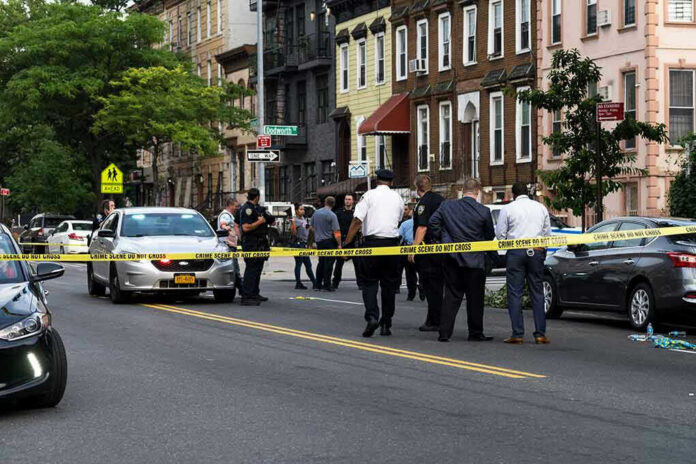
On May 11, 2026, Brown allegedly opened fire on Memorial Drive in Cambridge, striking vehicles and buildings and injuring bystanders. Local reporting described numerous rounds and chaotic scenes as traffic turned into targets, with evidence markers scattered along the roadway. The rampage ended only after intervention by authorities, but not before ordinary people commuting on a Monday became victims of another preventable storm of bullets on public streets [1].
Earlier that day, a parole officer reported Brown had made suicidal statements, prompting Boston police to attempt a welfare check. That alert demonstrated that supervision was active and responsive. Yet the events that followed on Memorial Drive showed supervision did not stop a man with a violent record from accessing a firearm and attacking the public. The sequence highlights a recurring problem: monitoring can document risk, but it often arrives too late to protect families on the road [1].
Sentencing Leniency Questions and Known Limits of the Record
Public records and news accounts show Brown received a 5–6 year state prison sentence in 2021, followed by probation and mental health requirements. Those terms are confirmed, but the available materials do not specify precisely how much time he served, whether he was paroled early, or how his punishment compared to Massachusetts guidelines for armed assault with intent to murder. Without those details, assessing whether the sentence was unusually lenient must remain cautious and fact-based [3].
What is clear is the outcome: a convicted assailant who once shot at police returned to the streets and allegedly opened fire on motorists. Questions now center on whether earlier sentencing, supervision, and mental health mandates adequately accounted for his demonstrated capacity for violence. Authorities have not yet provided comprehensive data on his supervision compliance or firearm acquisition, leaving a critical gap between stated policy goals and the on-the-ground reality felt by Cambridge families [1].
Accountability, Public Safety, and Common-Sense Reforms
Massachusetts officials have emphasized the rapid response to the Cambridge attack, but response after shots are fired is not prevention. Families expect a justice system that prioritizes public safety when offenders demonstrate willingness to shoot at police. The documented 2021 case, subsequent supervision, and the May 2026 rampage warrant a transparent accounting: exact time served, release decisions, risk assessments, and how a prohibited individual obtained a rifle despite prior convictions [1][3].
In 2021, Suffolk County Superior Court Judge Janet Sanders ignored prosecutors' recommendation of over 10 years in prison for Tyler Brown, giving him only five years for shooting at police. Monday afternoon, Tyler Brown went on another shooting spree in Cambridge. pic.twitter.com/NmICk8qQjl
— The Patriarch Tree (@PatriarchTree) May 12, 2026
Policy makers should evaluate whether sentences for violent assaults against law enforcement align with deterrence and incapacitation, and whether probation protocols translate risk flags into swift, concrete safeguards that keep guns out of dangerous hands. Conservative principles demand limited but effective government: enforce existing gun laws on violent felons, set sentences that protect the public, and ensure supervision that prevents—not merely documents—looming threats. Cambridge motorists deserved that protection before the first shot was fired [1][3].
Sources:
[1] Web – 7NEWS Sources: 2 people shot on Memorial Drive in Cambridge
[3] Web – Man Who Fired at Police Sentenced to Prison