featuredheadlines.com — America now faces a deceptively simple question with enormous consequences: should the people who write our laws and sit on our federal courts be required to be natural-born citizens, just like the president?
Story Snapshot
- A new constitutional amendment would bar naturalized citizens from Congress, the federal bench, and most top federal posts.
- Supporters frame it as a loyalty safeguard: power in American hands must rest with natural-born Americans only.
- Critics see a drastic break from the Founders’ design and a slap at patriotic immigrants who already swore the oath.
- The amendment faces sky-high legal hurdles but could reshape how Americans think about citizenship and power.
The proposal that would redraw the constitutional line on who can rule
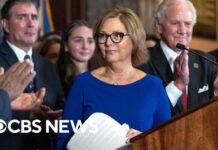
Representative Nancy Mace of South Carolina has introduced a joint resolution to amend the Constitution so that members of Congress, federal judges at every level, and all Senate-confirmed officers must be natural-born citizens of the United States.[1][3] The president and vice president already face that requirement; her amendment would extend that same standard across much of the federal power structure.[1][3] In plain terms, naturalized citizens could no longer serve in these positions, even after decades of lawful service.
Mace presents the idea in stark terms: if you hold power in American government, you should be a natural-born American citizen, and the people writing laws and confirming judges should have one loyalty—America.[1][3] The proposal has specific effective dates: new rules for representatives and senators would kick in at the start of the next Congress after ratification, while federal judges and Senate-confirmed officers would face the new bar six months after the amendment became law.[1] This is not a symbolic resolution; it is drafted to bite.
The immediate human impact: real names, real seats, real careers
This amendment is not a theoretical law-school exercise; it would instantly change the careers of more than a dozen sitting lawmakers and numerous prominent officials.[3] Fox News reports that Republicans like Senator Bernie Moreno, born in Colombia, and Representatives Juan Ciscomani, Young Kim, and Victoria Spartz, all naturalized after immigrating here, would be barred from serving in Congress.[3] Democrats including Pramila Jayapal, Ted Lieu, Robert Garcia, and Raja Krishnamoorthi would also be swept out by the same rule.[3]
The reach goes beyond Capitol Hill. Former Transportation Secretary Elaine Chao, who served in Republican administrations, and former Homeland Security Secretary Alejandro Mayorkas, who served under President Joe Biden, would both have been ineligible for their cabinet roles under Mace’s standard.[3] Supporters argue that this proves the amendment is blind to party and race; it targets status, not ideology.[1][3] Critics counter that it punishes some of the most obvious examples of immigrant achievement in the American story and treats their oath of citizenship as second-class.
The constitutional clash: Founders’ design versus modern loyalty fears
America’s Founders already debated who should be eligible for power and drew a deliberate distinction. The Constitution requires presidents to be natural-born citizens but only demands that representatives be citizens for seven years and senators for nine, with no birthplace requirement.[1] That text reflects a conscious choice: for the legislature, longevity in citizenship and residency mattered more than birthplace. Mace’s amendment would unwind that balance by importing the presidency’s strict rule into Congress, the courts, and the executive branch.
To change the Constitution, her proposal must clear a brutal two-step gauntlet: a two-thirds vote in both the House and Senate, followed by ratification by three-fourths of the state legislatures.[1][3] That is the same bar used for every successful amendment since the Founding. Fox News bluntly notes that the measure faces steep odds of adoption.[3] In practice, that means this fight may shape culture and future candidates more than near-term law, at least in the short run.
Loyalty, evidence, and the conservative common-sense test
Supporters invoke a common-sense intuition many conservatives share: divided roots can mean divided loyalties, and foreign influence already seeps into Washington through corporate money, international organizations, and soft power.[1][3] From that angle, drawing a firm constitutional line feels like locking the front door of the republic. However, the public record around this proposal so far offers rhetoric, not a documented pattern of disloyalty tied to naturalized status.[1][2][3] The accusations aimed at some named lawmakers, including charges of welfare and immigration fraud, appear in commentary without concrete evidence attached.[2]
Conservative values emphasize both national loyalty and individual responsibility. On that metric, a loyalty standard that treats every naturalized citizen as suspect, without showing a higher rate of disloyal or corrupt conduct, risks overreach. The Constitution already demands that every member of Congress and every federal officer swear an oath to support and defend the Constitution. Critics argue that if specific officials betray that oath, the answer is investigation, censure, or removal—not a blanket disqualification of millions of naturalized Americans who may have risked everything to become citizens in the first place.[1][2]
What this debate reveals about who we think “we” are
This amendment fight slots neatly into a broader American pattern: in eras of intense immigration and cultural conflict, elites reach for eligibility rules and loyalty tests.[1][2] The campaign around Mace’s resolution is branded in “America First” terms and amplified by media that talk about foreign-born lawmakers and supposed traitors.[1][2][3] Supporters see overdue self-defense; opponents see nativism dressed in constitutional clothing. Both sides are, at root, arguing about who counts as fully American when real power is at stake.
Rep. Nancy Mace just dropped a long overdue constitutional amendment: If you want to serve in Congress, become a federal judge, or hold any Senate-confirmed position (like governor-level roles or Cabinet), you must be a natural-born U.S. citizen, just like the President and Vice… pic.twitter.com/eLHDgbb6r0
— ❥❥❥ᗰoᒪᒪie❥❥❥ (@mollie_don) May 23, 2026
Because the proposal is unlikely to pass quickly, its most immediate impact may be on how candidates talk and how voters sort themselves. Expect more primary campaigns drawing sharp lines between natural-born candidates and naturalized opponents, more loyalty speeches, and perhaps more immigrants choosing local or state roles where this debate has not yet reached. The unresolved question is whether Americans still believe that the naturalization oath truly makes someone “one of us” for all purposes—including the right to help rule the country they chose.
@NancyMace Nancy Mace isn’t wrong though…article 2 section 1 clause 5 and the 12th amendment says you have to be a natural born citizen to be Pres and Vice President it should apply to the house and senate members also https://t.co/oN31zW8XUQ
— Laurie Schneider (@laurie1208) May 22, 2026
Sources:
[1] Web – Rep. Nancy Mace Introduces Joint Resolution Requiring …
[2] YouTube – Nancy Mace pushes ban on naturalized citizens in US government
[3] Web – Mace targets Squad Dem with proposed constitutional … – Fox News
© featuredheadlines.com 2026. All rights reserved.