A routine traffic stop on a Wisconsin bridge turned into a headline-grabbing arrest for former Dallas Cowboys quarterback and current NFL announcer Tony Romo.
Story Snapshot
- Milwaukee County deputies arrested Tony Romo on suspicion of operating while intoxicated after a stop on Interstate 43.
- Reports say Romo “performed poorly” on standardized field sobriety tests before he was taken into custody and booked.
- Romo was released the same night and given a September 21 court date for a first-offense impaired driving case.
- The episode shows how fast a police report on a public figure becomes a national story, long before a judge weighs in.
How a bridge stop became a national story
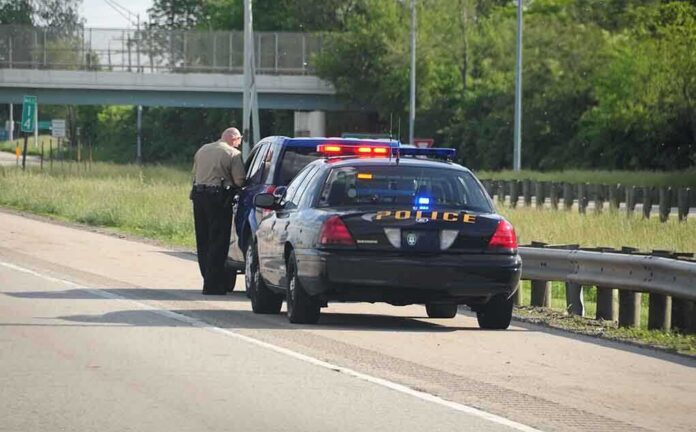
Milwaukee County Sheriff’s deputies stopped Tony Romo on Thursday evening while he drove southbound on Interstate 43 near Milwaukee, a busy stretch locals know as the high-rise bridge. According to the arrest-detention report described by several outlets, deputies pulled him over around early evening and began a standard impaired-driving investigation based on what they saw at the scene. That report quickly moved from a local ABC station to sports, national news, and talk shows across the country.
Accounts based on the sheriff’s report say Romo was asked to perform standardized field sobriety tests, the roadside balance and movement drills police use when they suspect impaired driving. The report states Romo “performed poorly” on those tests, which deputies treated as enough cause to arrest him on suspicion of operating while intoxicated. The language matters here: the process is built on suspicion and officer judgment, not a court finding of guilt, at least at this stage.
From roadside tests to booking and a court date
After the field tests, deputies took Romo into custody on an operating while intoxicated, first-offense allegation and transported him to the Milwaukee County Jail. Reports say he was formally booked, which means his information was entered into the system, a mug shot was taken, and paperwork was created for a court case. Romo was then released later that night, with the arrest-detention report and accompanying citation listing a court appearance scheduled for Monday, September 21.
Outlets citing the report describe this as a first-offense operating while intoxicated under Wisconsin law, which is usually treated as a civil violation instead of a criminal charge. A typical first offense in that state carries a fine in the low hundreds of dollars and possible driver’s license loss, not jail time for most drivers. That difference between civil and criminal is easy to miss in a three-word headline, but it shapes what is really at stake in court.
What we still do not know from the early coverage
None of the publicly described records so far show whether Romo took a breath, blood, or urine test after his arrest, or whether he declined one. Those chemical tests are what usually turn suspicion into hard numbers in a driving case, but they are often missing from the first wave of reporting because they sit in deeper court or lab files. Early stories focus on what is easiest to obtain fast: the initial arrest report, the mug shot, and the basic booking facts.
The descriptions of field sobriety tests also remain broad. Reports say Romo failed or “performed poorly” on standardized tests, but they do not spell out which specific drills were used, how many “clues” the deputy saw, or whether road conditions, medical issues, or footwear were described in the report. That detail matters in any impaired-driving case and often becomes the center of defense arguments later, yet it rarely gets into the first-day coverage of a famous name.
Celebrity arrests, media speed, and conservative common sense
This story fits a familiar pattern when a well-known figure meets a police record. A local station gets the sheriff’s report, publishes the basic facts, and then national outlets repeat the same core narrative with small changes in wording. By the end of the day, millions of people see “Tony Romo arrested for OWI” and many will quietly move that in their minds from suspicion to certainty, even though no judge has heard a word of evidence yet.
CBS NFL Analyst and Former Dallas Cowboys Quarterback Tony Romo Arrested on Suspicion of OUI https://t.co/igkPL8DlB1
— World I Used To Know 🇺🇸 (@pccote6623) July 24, 2026
From an American conservative and common-sense view, two ideas can exist together. First, drunk or impaired driving is serious and wrong, and law enforcement must treat it that way to protect families on the road. Second, the same system that protects us also promises due process, which means an arrest report and a mug shot do not equal guilt. That balance is basic fairness, and it should apply even when the driver is a famous NFL voice.
What happens next and why the follow-up matters
Romo’s court date will give a judge the chance to review the citation, hear the facts, and see whether the case ends in a fine, a reduced charge, or some other outcome. Wisconsin first-offense impaired driving often results in a civil penalty and license issues, but the exact result will depend on evidence that has not yet been made public. Later filings could show any chemical test results, body camera video, or challenges to the field sobriety findings.
The bigger lesson goes beyond one quarterback. For public figures, the arrest story is loud, fast, and hard to forget, while the quieter follow-up—dismissal, plea deal, or reduced penalty—rarely reaches the same audience. That gap encourages people to judge character by the first headline instead of the full record. Paying attention to how these stories unfold over months, not just hours, is the best way to stay fair, informed, and grounded in both safety and justice.
Sources:
thegatewaypundit.com, nytimes.com, espn.com, yardbarker.com, sportsmediawatch.com, youtube.com
© featuredheadlines.com 2026. All rights reserved.