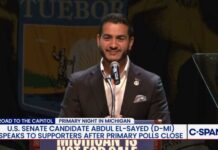
One short sentence on live television exposed how fragile our trust in political polling really is.
Story Snapshot
- Fox News released a poll showing Democrat James Talarico slightly ahead of Republican Ken Paxton in the Texas Senate race.
- Sean Hannity openly rejected his own network’s poll on air, saying he did not believe it “for two seconds.”
- The survey was a standard statewide poll of 1,006 registered Texas voters with a three-point error margin.
- Several other polls also showed a close race, some with Talarico narrowly ahead, feeding a fight over which numbers to trust.
When A Poll Becomes A Loyalty Test On National Television
Sean Hannity’s on-air clash over the Texas Senate race lasted only moments, yet it showed something big about modern politics. A Fox News poll had just landed with Democrat James Talarico at 51 percent and Republican Attorney General Ken Paxton at 48 percent, a three-point edge inside the margin of error. When a guest pointed to that number, Hannity snapped back that he did not believe it “for two seconds,” rejecting his own network’s data in front of millions.
That short reply turned a routine poll into a kind of loyalty test. Viewers were no longer simply being told where the race stood. They were watching a conservative host decide whether a result that looked bad for a Republican deserved respect at all. For many right-leaning Americans who trust Hannity more than any polling firm, his disbelief carried more weight than the survey’s careful design. That tension between numbers and narrative is now a core feature of our politics.
What The Fox News Texas Poll Actually Measured
The Fox News survey itself followed the normal playbook. Pollsters interviewed 1,006 registered voters across Texas between July 23 and July 27, with a reported margin of sampling error of plus or minus three points. The topline result was simple: Talarico at 51, Paxton at 48, which polling analysts quickly noted was a narrow lead in a very close race, not a blowout. Fox’s own write-up stressed that Republican divisions and voter crossover were shaping the contest, especially among independents.
Coverage from outlets like the Houston Chronicle, USA Today, and The Hill repeated the same core finding and gave extra detail. They reported that Talarico was drawing strong support from independent voters and even a slice of Republicans who were not closely tied to the “Make America Great Again” wing of the party. One summary pointed out that the Democrat was winning more than two-thirds of independents, the kind of shift that would matter in a traditionally Republican state. The message was clear: the race was tight, but Paxton’s support was softer than many conservatives expected.
How Other Polls Turned One Survey Into A Larger Pattern
The Fox poll did not appear out of nowhere. A New York Times and Siena College survey had already shown Paxton and Talarico tied at 47 percent among likely voters in Texas, with the Democrat gaining ground among Hispanic voters. A broader set of 2026 Senate polls collected by national outlets showed several close races between the two men, including a few that leaned slightly toward Talarico. Taken together, those numbers suggested a shifting landscape rather than a single surprise data point.
Axios reported that three consecutive polls around that time found Talarico narrowly ahead of Paxton, with the latest putting the Democrat at 47 percent and Paxton at 45 percent. Local coverage in Austin described Republicans growing nervous as multiple surveys pointed to a dead-even or Talarico-tilting race rather than a safe Republican seat. For poll watchers, this looked like a trend line. For many conservative voters, especially in a state long seen as solid red, it felt more like a challenge to their assumptions than settled fact.
Why Hannity’s Skepticism Resonates With Many Conservatives
Hannity’s refusal to accept the Fox numbers fits a wider conservative frustration with how polls shape news coverage. For years, many on the right have watched survey after survey underestimate Republican strength in final election results, especially when media outlets rushed to treat early numbers as proof that conservative candidates were finished. Hannity’s quick dismissal spoke to that memory: a feeling that the “experts” often count Republicans out too soon, then shrug when they turn out to be wrong.
Sean Hannity of Fox News rejects a poll showing Texas state Rep. James Talarico (D) leading Attorney General Ken Paxton (R) 51% to 48% in the race for U.S. Senate in Texas, because he knows better than to trust a crappy source like Fox Newshttps://t.co/dPciUYLVls
— MakerParty 🇺🇸 (@Makerparty2) August 5, 2026
From a common-sense conservative view, a poll that shows a three-point lead within a three-point margin of error does not justify declaring a Democrat in front in Texas. It simply says the race is close and volatile. Even Fox’s own guidelines note that question wording and order can affect responses, and that polls are snapshots, not prophecies. That is why many Republicans treat unfavorable numbers as a warning light at best, not a reason to lose faith or abandon a candidate they see as fighting for their values.
What This Fight Over One Poll Reveals About Trust And Power
The deeper story here is not whether Talarico was really up by three points that week, but who gets to define reality for voters. When a major network’s polling unit publishes careful numbers and a star host shrugs them off, viewers face a choice. They can trust the statistics, trust the personality, or treat both as partial guides. In a divided country, that choice often breaks on tribal lines rather than sober review of method details, which most people never see or read.
For conservatives, the takeaway that best aligns with American values is wise skepticism without blind rejection. Polls done by known firms with disclosed samples deserve a fair look, especially when several different outlets show the same basic pattern. At the same time, no Christian, constitutional, or common-sense principle requires surrendering judgment to a three-point spread in July. The Texas Senate numbers remind voters that they, not polls, decide elections. Healthy doubt can guard against spin, but only if it pushes people to think harder, not to stop thinking at all.
Sources:
mediaite.com, foxnews.com, thehill.com, youtube.com, nytimes.com, fox7austin.com
© featuredheadlines.com 2026. All rights reserved.