

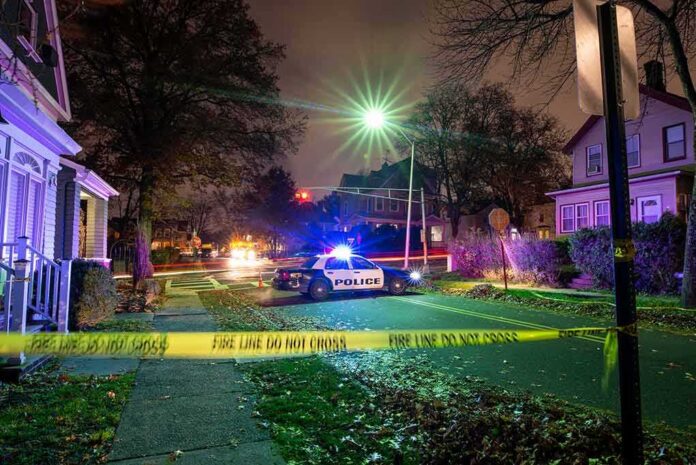
Two North Carolina murder suspects died inside their car after a multi-county police chase in southern Ohio.
Story Snapshot
- Camryn Moore, 26, and Cory Armstrong, 29, were wanted in a Gaston County quadruple shooting.
- Ohio troopers pursued their vehicle across multiple counties before it came to a stop.
- Both suspects were found dead inside the car; investigators reported gunshot wounds.
- State authorities are investigating the stop and the cause of death.
Manhunt Ends On An Ohio Back Road
Gaston County authorities named Camryn Moore and Cory Armstrong as suspects in a quadruple shooting that left one person dead and three wounded. Warrants for first-degree murder and attempted first-degree murder went out quickly, and alerts crossed state lines. Ohio law enforcement spotted the suspect vehicle and pursued it through southern counties. The chase ended when the car stopped, and officers approached. Both suspects were found dead inside the vehicle, according to multiple local outlets.
The Ohio State Highway Patrol said both Moore and Armstrong had gunshot wounds and announced an active investigation into the stop and deaths. Officials have not publicly detailed the sequence inside the car. That work usually includes body camera review, gunshot residue testing, and ballistics. The facts released so far track with a fast-moving, multi-agency pursuit that ended without additional injuries to bystanders or officers, a priority when danger is already high.
What We Know About The North Carolina Case
Gaston County investigators tied Moore and Armstrong to a Thursday shooting at a home that turned a family space into a crime scene. Police said one victim died and three others suffered injuries that sent them to hospitals. Detectives issued murder and attempted murder counts and moved to locate the suspects as tips came in. The public message was simple: armed, dangerous, and on the run. That clarity likely helped Ohio officers react fast when the vehicle hit their roads.
Officials in North Carolina coordinated with Ohio counterparts as the chase unfolded. Cross-state cooperation matters in violent felony cases because the clock works against public safety. Radio handoffs, shared suspect descriptions, and confirmed plate data shorten response time. The end of this pursuit came in Ohio, but the charges and facts that triggered it began in Gaston County. That linkage underscores why clear warrants and quick interagency alerts are not red tape; they are lifesaving tools.
How Police Chases Turn Deadly So Fast
Pursuits are rare compared to all traffic stops, but their risks spike in seconds. National research shows thousands of pursuit-related deaths across recent years, with a steady rise that now accounts for about one percent of all motor-vehicle fatalities. That figure means every policy choice—initiate, continue, or break off—carries real stakes for suspects, officers, and the public nearby. Older federal data also shows an average of about one pursuit death per day over two decades.
Suspects in NC quadruple shooting die during dramatic Ohio chase, police say https://t.co/VyBK2qUKFh
— Miami Herald (@MiamiHerald) September 12, 2026
Commanders weigh violent-offense threats against roadway risk. Felony suspects in a fresh homicide case raise the threshold to engage and to keep pressure on. The Ohio chase ended without additional third-party deaths, an outcome any chief will defend when facing families and city councils. The hard truth from the data is simple: pursuits are among the most dangerous acts in policing, but stopping known violent offenders before they harm more people is a core duty that most citizens support when the facts warrant it.
Sources:
nypost.com, wbtv.com, dayton247now.com, abc6onyourside.com, nbc24.com
© featuredheadlines.com 2026. All rights reserved.