
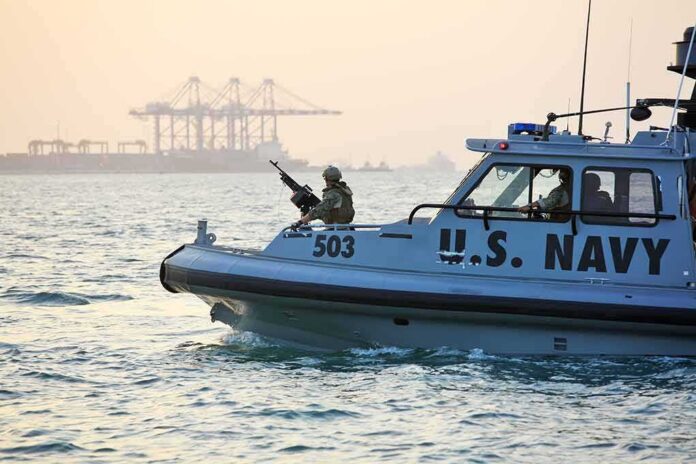
U.S. forces destroyed an Iranian-affiliated dhow in the Gulf of Oman after identifying it as a spotter ship tracking and targeting American Navy vessels on October 6, with the crew removed before the strike.
Story Snapshot
- CENTCOM said the dhow surveilled and targeted U.S. Navy ships, then was destroyed on Oct. 6.
- The crew was taken off safely before the vessel was blown up, with repatriation underway.
- Independent outlets echoed the core timeline, location, and crew removal details.
- A U.S. official said spotters relayed targets to Iran’s Revolutionary Guard.
What Happened And When
U.S. Central Command said American forces located and destroyed an Iranian-affiliated dhow in the Gulf of Oman on October 6. The command stated the dhow conducted surveillance and “targeting” of U.S. Navy ships in the area. The announcement came on October 14 and included two core points: the vessel’s connection to Iran-linked actors and the specific conduct that triggered action. The crew was taken off the dhow before the strike, and officials began repatriation steps soon after.
Major newsrooms matched these basic facts in their own coverage. The Associated Press summarized the U.S. account in a brief that cited the same date, location, and allegation of surveillance and targeting. Other maritime and regional outlets followed with similar detail, and all highlighted that the crew was removed ahead of the strike. The shared touchpoints suggest a single factual spine anchored to the Central Command statement.
How The U.S. Framed The Threat
CENTCOM used precise language about the dhow’s role. The command accused the vessel of both watching U.S. ships and supporting efforts to guide attacks. A separate report, citing a U.S. official, said personnel aboard the dhow were “calling in” targets to Iran’s Islamic Revolutionary Guard Corps. That claim draws a straight line from a small wooden trading vessel to a military targeting loop, which explains why the U.S. opted to take the dhow off the water after removing the crew.
This incident aligns with a long-running pattern in the region. Iran and its partners have leaned on “gray zone” tactics at sea that press opponents without shifting into open war. Analysts have described a model built on ambiguity, pressure, and deniable helpers who stalk targets and feed information. That background does not decide every case on its own. It does explain why militaries treat spotter boats and covert relays as real threats to warships in tight waters.
Why A Dhow Matters In A Warship’s World
A dhow can blend into local traffic, yet still track a destroyer’s route and habits. With a phone, a radio, or a small transmitter, a crew can share bearings and timing with attackers. That kind of low-tech relay can cue a drone, a missile, or a fast-boat swarm. U.S. commanders train to break that chain early. Removing a vessel that behaves like a spotter shuts the door on a follow-on strike and signals that shadowing American ships carries a high cost.
Rules at sea allow a state to defend its forces against a clear and present danger. That includes action against hostile support if it helps enable an attack. Legal scholars point to a state’s inherent right of self-defense and the need to stop targeting activity before it turns lethal. In narrow seas, time and distance are tight. A suspicious vessel can close in fast, and weapons can arrive even faster, which shapes decisions in the moment.
The Stakes For U.S. Policy And Power
The United States sent two messages here. First, American ships will not accept “surveillance” that looks like targeting prep. Second, the U.S. will separate crews from hulls and then remove the hulls if needed. That mix hits key conservative values: protect American lives, act with restraint toward noncombatants, and deny enemies the tools they use to hide in plain sight. Expect more of this playbook as shadow fleets try to test U.S. resolve in crowded lanes.
CENTCOM also tied this event to a wider story about Iranian threats at sea. The command has warned about attacks on civilian mariners and U.S. warships by Iran and its partners. Removing a suspected spotter fits a broader push to blunt those networks before they strike. While one sentence in the public brief noted that the crew was out of danger first, the core goal was clear: break the targeting chain, keep American sailors alive, and keep the sea lanes open.
Sources:
foxnews.com, marineinsight.com, apnews.com, gulfnews.com, naftemporiki.gr, english.alarabiya.net, kurdistan24.net, x.com
© featuredheadlines.com 2026. All rights reserved.