
featuredheadlines.com — Southwest Airlines quietly drew a line in the sand of our tech future the moment it told a Texas-made humanoid robot, “You will not fly again.”
Story Snapshot
- Southwest Airlines now bans human-like and animal-like robots from cabins and checked bags, no matter the size or purpose.
- The change followed a viral flight featuring “Stewie,” a 3.5‑foot humanoid robot that had its own ticket and seat.[1][2][3]
- Southwest claims the move is about lithium-ion battery safety, not robot prejudice.[1][2]
- The episode exposes how big companies react when new technology collides with old rules and public fear.
How One Humanoid Robot Lost Flying Privileges For Its Entire Species
Southwest Airlines did not wake up one morning suddenly worried about robots; it reacted to a very specific machine named Stewie. A Texas robotics entrepreneur booked Stewie its own ticket and seat on a Southwest flight between Dallas Love Field and Las Vegas, depending on which report you read, turning a trade-show companion into a viral celebrity.[1][2][3] Passengers took selfies, the crew played along, and by all accounts, the flight itself went off without a hitch.[1][3]
Stewie did not sneak aboard. Reports say the owner powered it down, swapped in a smaller lithium-ion battery, and cleared security screening after Transportation Security Administration officers inspected the robot and its power source.[1][3][4] The owner later insisted that the custom battery was under the Federal Aviation Administration’s watt-hour limit and “essentially a laptop battery.”[1][3] No overheating, no smoke, no emergency landing. Just a robot riding coach and the internet eating it up.
From Viral Curiosity To Corporate Red Line Overnight
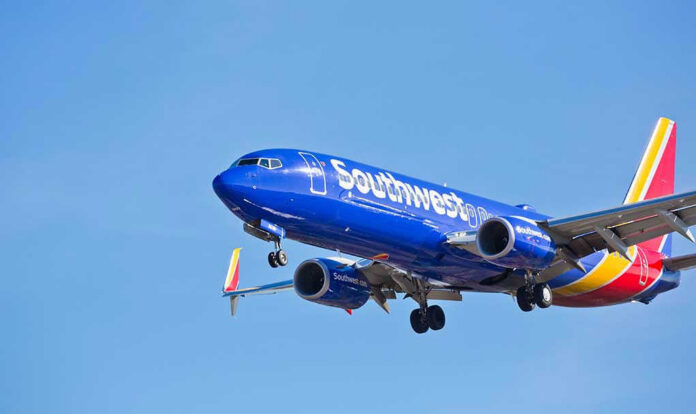
The real fireworks started after the flight, not during it. Local outlets in Texas report that within a day or two of Stewie’s trip and the viral videos, Southwest issued a companywide safety alert revising its baggage policy.[1][3] The new rule: no human-like or animal-like robots in the cabin or as checked baggage, regardless of size or purpose.[1][2][3] That is a broad brushstroke, more like a fence around a category than a targeted fix for one misbehaving gadget.
Southwest publicly framed the change as a lithium-ion safety measure. Spokespeople said the clarification aimed to ensure compliance with guidelines governing lithium-ion batteries, which regulators treat as potential fire hazards in flight.[1][2][3] Anyone who has heard mid-flight warnings about spare batteries knows this is not invented out of thin air. Lithium-ion failures are rare but dramatic, and airlines carry the legal and political risk if something goes wrong at 35,000 feet.
The Safety Story And Its Missing Pages
The facts you can see are straightforward; the facts you cannot see are where the questions start. Reports point out that Stewie’s revised battery package complied with limits that the Federal Aviation Administration and airlines already apply to laptops and other consumer electronics.[1][3] The owner stresses that everything was “totally under the FAA limit,” and no one has produced evidence of any incident on that flight or earlier legs.[1][3] The ban therefore did not follow a fire; it followed a photo op.
Southwest so far has not released the full text of its internal safety alert or any technical analysis explaining why humanoid robots are uniquely risky compared with, say, electric wheelchairs, camera rigs, or musical gear packed with similar batteries.[1][2] Some coverage even quotes the airline suggesting the ban had been under consideration for months, which, if true, implies Stewie may have been more of a trigger than a cause.[4] Without the memo and data, the public gets conclusions, not reasoning.
Robots, Risk, And A Conservative Instinct To Overcorrect
People who grew up when smoking was allowed on planes instinctively understand why airlines lean hard toward caution. When you strap a few hundred strangers into a pressurized metal tube, the wrong kind of experiment can get people killed. From that perspective, Southwest’s decision to clamp down on a new device category fits a longstanding pattern: when regulators have not yet drawn clear lines, companies often slam the door first and narrow it later.[1][2]
Sorry "Stewie"! Southwest Airlines is now saying no to robot passengers after a man booked a seat for his humanoid robot named "Stewie". The next day, the airline updated its' baggage policy to ban robots. @fox35orlando https://t.co/76MRtPk17Y
— Amy Kaufeldt FOX 35 (@Fox35Amy) May 19, 2026
That instinct tracks with common-sense conservative values: protect life, respect existing rules, and avoid letting hype drive safety standards. But responsible caution also demands clear, consistent reasoning. Banning all human-like and animal-like robots, regardless of their battery size or configuration, while continuing to allow piles of laptops and power banks, raises a simple question many Americans will ask: is this really about risk, or about optics and control? Without transparent standards, “trust us” eventually wears thin.
What This Means For The Rest Of Us, Beyond The Punchline
Most travelers will never try to buckle a robot into a Southwest seat, but this decision tees up tomorrow’s fights. Today it is a three-foot humanoid nicknamed Stewie; tomorrow it may be assistive robots that help disabled passengers, or inspection robots used by maintenance crews, or personal devices that blur the line between luggage and companion. If airlines treat every unfamiliar machine as a public-relations liability first and a technical problem second, innovation gets quietly choked at the gate.
On the other side, robotics companies now have a loud wake-up call. If they want their creations to leave the lab and enter normal life, they must meet existing safety regimes head-on instead of assuming they are “just like a laptop.” Detailed battery specifications, independent engineering sign-off, and upfront cooperation with regulators will matter far more than viral clips. The Stewie episode exposed a gap between what our technology can do and what our institutions are prepared to handle. That gap will not close by itself.
Sources:
[1] Web – A humanoid robot flew on Southwest Airlines to Dallas. …
[2] YouTube – Southwest Airlines adds robot ban after viral Love Field flight
[3] YouTube – Southwest Airlines bans human-like and animal-like robots
[4] Web – Southwest Airlines bans humanoid robots from flying in new policy
© featuredheadlines.com 2026. All rights reserved.