Congress just let a cornerstone spy power stumble, and the reasons say more about trust than tech.
Story Snapshot
- The House failed to pass a short-term Section 702 extension under a two-thirds vote rule [12].
- Republican senators warned the authority could lapse amid a fight over leadership and reforms [13].
- Watchdogs call Section 702 valuable but flag serious privacy risks that demand safeguards [2][3].
- Recent law already tightened some rules, proving reform and security can move together [4][6].
Why the House Stalled, Even With a National Security Sales Pitch
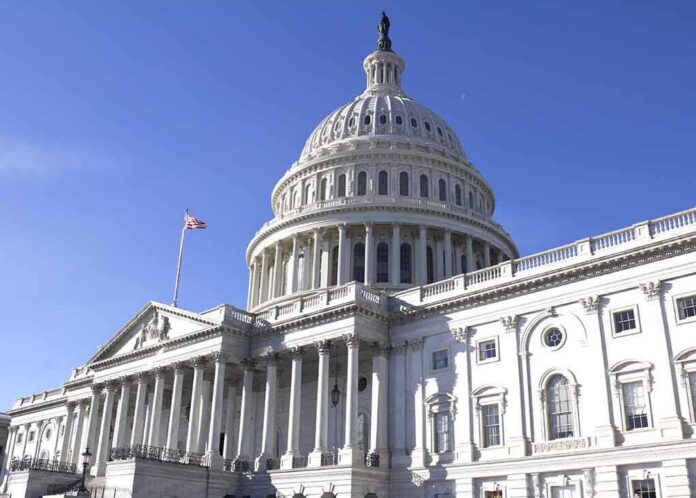
The House voted 198 to 218 on a three-week extension, far short of the two-thirds needed under suspension of the rules, leaving a gap risk on a core surveillance power known as Section 702 of the Foreign Intelligence Surveillance Act [12]. Senate Republicans had already warned the program could lapse within days as tempers flared over a disputed pick to lead intelligence, which turned a technical question into a loyalty fight [13]. That mix—process math plus politics—beat a simple “keep the lights on” plea.
Officials argue Section 702 helps track terrorists, spies, and cyber crews overseas without a warrant, and that walking away invites danger [7]. The Privacy and Civil Liberties Oversight Board, an independent watchdog, calls the authority “highly valuable” and says the country is safer with it than without it, while urging guardrails [2][3]. That dual message—keep it, but police it—does not fit well in a high-drama vote clock. It should, because it is how conservative governance balances safety and restraint.
What Section 702 Actually Does—and Why It Sparks Heat
Section 702 lets the government collect communications of non-Americans abroad, then lets agencies search that data for threats [4][23]. Americans’ messages can get swept in if they contact those foreign targets, which raises Fourth Amendment concerns when agencies query the data for U.S. person information [2][3]. The new Reforming Intelligence and Securing America Act in 2024 extended 702 to 2026 and locked in several compliance steps for the Federal Bureau of Investigation, including approvals and audits for U.S.-person searches [4][6]. That shows Congress can tighten screws without gutting tools.
Supporters warn that losing speed and reach would blind analysts hunting foreign plots, proliferation networks, and hacking campaigns [7]. The National Security Agency has called 702 one of its most important authorities, and said losing it would put the country at a “perilous disadvantage” [7]. That is a clear national-security case. Yet it must stand alongside facts about misuse and overreach risks, which critics cite to demand warrants for some searches. The oversight board itself highlights “serious privacy and civil liberties risks” that need action [2][3].
The Real Problem: Trust, Not Capability
Public patience ran thin after repeated headlines about flawed queries that touched Americans’ data. That trust deficit makes rushed extensions a hard sell. The oversight board’s 2023 review underscored both the program’s value and the depth of risk, especially around U.S.-person queries [2][3]. The 2024 transparency report from the Office of the Director of National Intelligence confirms Congress already moved to codify tougher Federal Bureau of Investigation procedures, including proactive compliance and audits [4][6]. Reform did not break the tool; it strengthened the guardrails.
Common sense, rooted in limited government, says this: keep a proven foreign-intel edge, but set bright lines when Americans’ rights are at stake. A warrant rule targeted to viewing Americans’ content in 702 data, combined with fast emergency exceptions and clean after-action audits, would honor both security and the Constitution. The record does not prove that such limits would cripple collection, and Congress has shown it can calibrate without chaos [4][6].
What Happens Next If the Clock Runs Out
A lapse headline does not mean instant darkness. If a Foreign Intelligence Surveillance Court order remains in effect, agencies can continue operating under that order until it expires, even if the statute sunsets, according to congressional research summaries of current law [23]. That buys time, not comfort. Markets for digital threats do not pause because Congress misses a vote. Leaders should use the window to anchor a deal that hardens safeguards while preserving foreign collection at speed.
SCOOP — Sens. Cotton & Grassley ask Rubio to “plan for a potential significant gap in foreign intelligence collection” as Senate Dems block FISA 702 extension over Pulte appointment as acting DNI. Deadline is next Friday. pic.twitter.com/MPW42YfyGp
— Andrew Desiderio (@AndrewDesiderio) June 6, 2026
The clean path pairs three moves. First, enshrine documented compliance gains for the Federal Bureau of Investigation as statutory floors with real penalties for violations [4][6]. Second, require a warrant to access the content of Americans’ communications from the 702 pool, with narrow exigent carve-outs and quick court review. Third, mandate public case studies that show post-reform wins without burning sources, so citizens can see why the tool matters. Value plus verifiable restraint will rebuild trust and end the cycle of brinkmanship.
Sources:
[2] Web – The Truth Behind Section 702 Query Statistics
[3] Web – report on the surveillance program operated pursuant to …
[4] Web – [PDF] report on the surveillance program operated pursuant to section …
[6] Web – Report on the Surveillance Program Operated Pursuant to Section 702 of …
[7] Web – Annual Statistical Transparency Report
[12] Web – Controversial surveillance program faces uncertain future ahead of …
[13] Web – Republican senators warn surveillance program may lapse after …
[23] Web – FISA Section 702 Isn’t Broken. Why Are We Still Trying to …
© featuredheadlines.com 2026. All rights reserved.