The story of an ICE agent killing Ruben Ray Martinez in Texas only truly begins when you watch the bodycam video that federal officials tried to keep out of sight.
Story Snapshot
- A Homeland Security agent shot 23-year-old U.S. citizen Ruben Martinez during a late-night traffic stop on South Padre Island.
- Federal officials claimed Martinez “intentionally ran over” an agent, but video shows his car barely moving with the brakes on.
- The shooting was ruled “justifiable homicide,” yet the incident stayed hidden from the public for almost a year.
- The only passenger witness died days before testifying, and calls for a deeper investigation were refused.
How A Late-Night Traffic Stop Turned Deadly
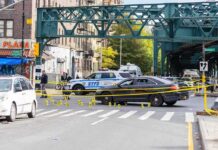
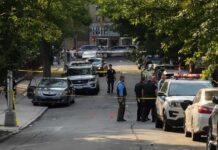
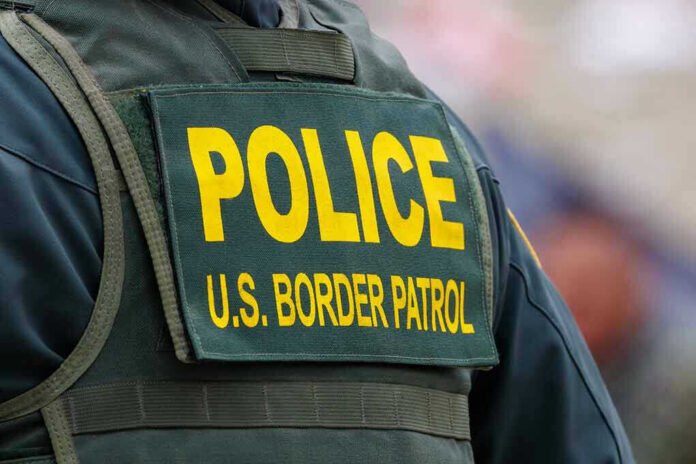
On March 15, 2025, local police and federal immigration agents gathered on South Padre Island to handle a traffic accident scene. Ruben Ray Martinez, a 23-year-old U.S. citizen from San Antonio, drove up in a blue Ford Fusion. Homeland Security Investigations agents, a branch of Immigration and Customs Enforcement, were helping with traffic control. Officers ordered Martinez to get out of his car. He stayed inside, and that simple choice set off a chain of events that ended with gunfire and a dead young man.
The Department of Homeland Security later claimed Martinez “intentionally ran over” an agent, forcing another agent to fire “defensive shots” to protect his partner and the public. An internal report said Martinez “accelerated forward” and struck an agent, who ended up on the hood of the car. That report, echoed by press statements, paints a dramatic picture: a drunk, high driver using his car as a weapon, and a federal officer with seconds to choose between shooting or being killed.
What The Video Shows Instead
That dramatic official story began to crack when body camera footage finally surfaced. Video obtained by CBS News shows Martinez’s Ford Fusion either stopped or moving at a very low speed when the shots are fired, with the brake lights lit. Another set of videos released by the Texas Department of Public Safety shows the car “barely moving” as attorneys put it, and no agent on the hood or standing in front at the moment of the shooting. These images do not match claims of a car surging forward in a clear attack.
Attorneys for Martinez’s family reviewed the footage and said it confirms the opposite of the federal narrative. In their words, Ruben was braking, not accelerating, nobody was on his hood, nobody was in front of the car, and he was shot at point-blank range through the side window by an agent “who was in no danger.” For any viewer, this raises a blunt question rooted in common sense: if the car is nearly still and the officer is at the side window, where is the immediate deadly threat that justifies pulling the trigger?
The Witness Who Never Reached The Grand Jury
There was one person besides the agents who saw what happened up close: passenger Joshua Orta, Ruben’s friend. In a written statement prepared for lawyers, Orta said Martinez tried to follow the officers’ orders and did not run over anyone. He claimed agents fired “multiple shots” through the driver’s window without warning and that Ruben was unarmed and not resisting when bullets tore into him. That account directly clashes with the government story of a driver turning his car into a weapon.
Four days before Orta was set to appear before a Cameron County grand jury, he died in a fiery car crash. Authorities never interviewed him about the shooting before his death. His statement exists on paper, but he never spoke under oath. To critics, this gap looks less like bad luck and more like a justice system that is oddly relaxed when key testimony could challenge a federal agency. For conservatives who believe in individual responsibility and honest government, a missing witness in a deadly-force case should be a flashing red light.
Cleared Agents, Hidden Shooting, And A Pattern Of Protection
Despite the conflicting video and the unused witness statement, the Cameron County grand jury ruled the killing a “justifiable homicide,” and the ICE agent faced no criminal charges. Acting ICE Director Todd Lyons said the Texas Rangers examined the case “from every possible angle” and found “no criminality.” Lyons pointed to a Rangers report describing Martinez holding a bottle of Crown Royal whiskey, “rolling toward an officer’s location,” and an officer appearing to move as if on the vehicle’s hood. Yet the public has not seen that full report.
The public also did not hear about ICE’s role for almost eleven months. ICE only confirmed one of its agents shot Martinez after a nonprofit watchdog obtained internal records and Newsweek reported the story. By then, the grand jury had already ruled and the agent had been cleared. This slow disclosure feeds a hard question: are federal immigration officers playing by different rules than everyone else when someone dies? When deadly force is used during immigration operations, government often seems faster to defend agents than to share facts.
Why This Case Matters Beyond One Night In Texas
From 2015 to 2021, Immigration and Customs Enforcement agents were tied to at least 59 shootings, 23 of them fatal, with no clear evidence of any officer facing criminal punishment. In recent years, federal immigration officers have shot multiple American citizens in incidents where officials again claimed drivers tried to “run them over,” only to have video later show cars turning away or barely moving. The Martinez case fits that larger pattern: first comes the claim of a weaponized car, then the video that casts doubt, then a cleared agent.
Civil rights attorneys and lawmakers have asked the Department of Justice to investigate what happened to Ruben Martinez and why the shooting stayed quiet so long. The department declined. For many Americans, especially those who value law and order, this feels backwards. Police and federal agents absolutely deserve protection when they face real danger. But when a young citizen dies in a parked or barely moving car and the story does not match the tape, the system should dig until the truth is clear, not close ranks and move on.
Sources:
nypost.com, ksat.com, americanoversight.org, abcnews.com, facebook.com, youtube.com, pbs.org
© featuredheadlines.com 2026. All rights reserved.