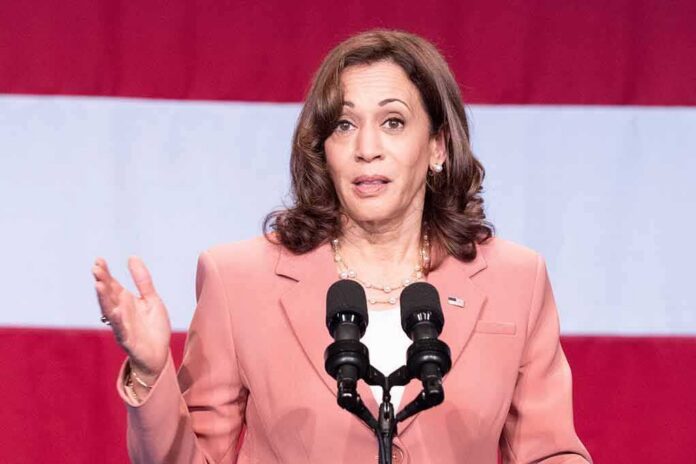
Mary Peltola told Kamala Harris “thanks, but no thanks,” and Alaska politics snapped into focus.
Story Snapshot
- Peltola’s campaign said it did not approve or seek Harris’s endorsement email.
- The campaign framed its stance as Alaska-first, not Lower 48-driven.
- Harris’s email urged donations split between her committee and Peltola.
- Republicans seized on the link to national Democrats and climate politics.
Peltola Draws a Bright Alaska Line
Mary Peltola’s team told The New York Times it did not approve Kamala Harris’s fundraising appeal and did not seek her endorsement. The statement stressed that Peltola wants no endorsements from the Lower 48 and that her focus is Alaska. The message was direct, not coy. It put distance between the candidate and a national figure who lost Alaska, while signaling to swing voters that she will not run a Washington, D.C. campaign in a resource state.
Harris’s email urged supporters to “stand behind Mary,” called the Senate race a “must-win,” and linked to a page that split donations between Peltola and Harris’s committee. That is standard national playbook: tie a local race to a national brand and harvest energy and cash across state lines. It can work. It can also backfire when the endorser polls poorly in that state. Peltola’s team chose containment over co-branding.
Why The Endorsement Became A Liability
Alaska politics run on energy jobs, union pragmatism, guns, and independence. National Democrats often run on climate goals that sound like shutdowns to North Slope workers. Republicans saw Harris’s boost as proof Peltola would vote with the party’s climate wing. Conservative media and operatives pressed that theme, pointing to a roster of national Democrats behind her bid and warning it clashes with Alaska’s oil economy and common sense pocketbook concerns.
The endorsement effect research is clear enough for any campaign shop: famous validators can lift donations and attention, but mismatched brands can trigger backlash and harden opposition. Voters treat endorsements as shortcuts. If the messenger is disliked or seen as out of touch, the shortcut leads away from you, not toward you. Peltola acted like a candidate who has read the literature and knows her market, which rewards local trust over national applause.
The Strategic Math On Both Sides
Peltola needs this race framed around fisheries, roads, responsible oil development, and her personal fit with Alaska life, not around national climate fights. Keeping Harris at arm’s length helps that. It also blunts the attack that she would serve party bosses over Alaska workers. That framing aligns with conservative instincts about local control, energy reliability, and the danger of top-down rules from Washington that ignore cold-weather reality and the price of diesel in remote towns.
You people are goddamned idiots. There’s nothing to reject. Harris has not offered an official endorsement of Peltola. But they have been fundraising together for months. 🙄 pic.twitter.com/7vvK2PEJut
— CB (@singwithCB) August 15, 2026
Harris had her own logic. National leaders chase “must-win” narratives to rally donors and show relevance. A joint ask juices small-dollar giving lists, even when the endorser is not popular in the state at issue. But the split-dollar link gave Republicans a clean line of attack: this campaign belongs to national Democrats. That line is potent in a state that prizes independence and has little patience for activists who treat the Trans-Alaska Pipeline like a villain in a movie.
What To Watch As The Primary Nears
First, watch whether Peltola repeats the Alaska-first line in ads and debates, and whether she pairs it with firm commitments on oil, gas, and permitting. Second, track if national Democrats keep helping from a distance or step back to avoid doing harm. Third, look for Republican contrasts that tie her to national climate agendas and higher energy costs. That argument clicks with common sense: a cold state cannot gamble on wishful energy plans and keep families safe.
One caution belongs here. A campaign’s pushback against an endorsement does not erase the fact that some voters will still connect the dots. But the on-the-record refusal matters. It gives swing voters permission to treat Peltola as her own brand. It also puts the burden on her opponents to prove she would vote against Alaska’s interests. That is the right burden of proof in a state that rewards results, not party theater.
Bottom Line
Peltola drew a hard boundary to keep her race about Alaska, not a national wish list. Harris tried to help by nationalizing the stakes and money flow. Those are rational moves that pull in opposite directions. The winner of this tug-of-war will be the side that convinces Alaskans who heats their homes, protects their jobs, and respects their way of life. On that score, rhetoric will not cut it. Tangible, local promises will.
Sources:
nypost.com, townhall.com, adn.com, nrsc.org, thealaskastory.com
© featuredheadlines.com 2026. All rights reserved.