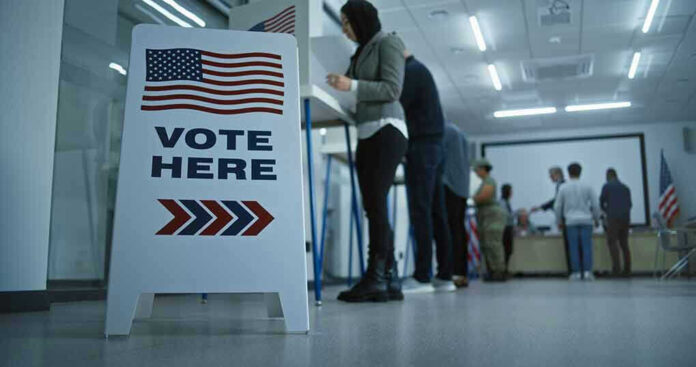
Michigan’s Supreme Court just handed the GOP and RNC the green light to sue Flint over lopsided poll worker appointments—finally, someone’s putting their foot down on election shenanigans that have gone unchecked for years.
At a Glance
- Michigan Supreme Court reverses decades-old precedent, allowing state and national GOP to sue over partisan poll worker imbalance in Flint.
- City of Flint faces legal scrutiny for allegedly shortchanging Republican poll worker appointments during the 2022 election.
- Ruling could shift election oversight power to state and national parties, impacting local election administration statewide.
- Case heads back to lower courts, potentially setting a major precedent for future election integrity battles in Michigan and beyond.
Supreme Court Sides with GOP: Local Election Monopoly Challenged
For over 70 years, Michigan’s local party insiders enjoyed virtually unchecked power when it came to appointing poll workers, with the law supposedly requiring “as nearly as possible” even numbers from both major parties. Yet somehow, in places like Flint, that “nearly as possible” always seemed to tip in one direction. The Michigan Republican Party and the RNC finally called out this charade after Flint’s 2022 elections, alleging the city stacked the deck by appointing far too few Republicans as election inspectors. Local courts—predictably—told them to take a hike, claiming only local party hacks could challenge these appointments. But now, in a 5-1 decision that’s sending shockwaves through Michigan’s political machine, the Supreme Court just yanked away that exclusive power and handed it to the state and national parties. For the first time, the big dogs in Lansing and DC can finally force a real reckoning over how poll workers are picked in every corner of Michigan.
That’s right—after years of being told to sit down and shut up while Democrat strongholds like Flint ran elections with “bipartisan” crews that look suspiciously monochrome, the GOP has a seat at the table. The highest court in the state recognized what anyone with eyeballs and a shred of common sense already knew: when you freeze out one side from the process, trust in elections craters. This ruling means the lawsuit against Flint is barreling back to the lower courts, where city officials will finally answer for how they handled poll worker appointments during the last election. In a state where razor-thin margins decide everything, the days of rubber-stamping partisan slates behind closed doors could be numbered.
Election Integrity or Partisan Overkill? The Immediate Fallout
Flint city leaders now face a legal mess of their own making. The Supreme Court’s order put it bluntly: the major parties—yes, the state and national leadership, not just a handful of local “insiders”—have a “special right and substantial interest” in making sure poll workers are chosen fairly. The lawsuit will now return to lower courts for a closer look at whether Flint’s 2022 poll worker slate really did stiff-arm Republicans out of the process. If the GOP’s allegations hold up, Flint and cities like it might have to overhaul how they hire and assign poll workers for every election moving forward. And you can bet other Michigan cities with similar “imbalances” are sweating bullets, knowing they’re next on the chopping block.
But the impact doesn’t end with Flint’s city hall. This ruling is a shot across the bow for every local election office in Michigan that’s gotten a little too cozy with one party calling the shots. Statewide, party officials now have the muscle to drag cities into court whenever partisan “parity” is ignored—which, let’s be real, has been happening far too often under the old rules. The Supreme Court’s decision could trigger a wave of lawsuits and force some overdue transparency into a system that’s been running on backroom deals and selective enforcement for decades.
From Local Control to State Power: The Political Earthquake Ahead
Beyond the immediate legal drama, the Supreme Court’s decision is already sparking fierce debate about who really controls Michigan’s elections. For decades, power rested with local party officials, supposedly “in touch” with their communities. But as anyone who’s watched the last few election cycles knows, that arrangement conveniently insulated local machines from real accountability. Now, the pendulum has swung toward state and national party organizations, who suddenly have the standing to fight for fair representation at every polling place in Michigan. Critics say this could “politicize” local election administration, as if the current system hasn’t already been rigged by partisan players hiding behind the veil of local control.
Legal scholars and pundits are scrambling to predict the fallout. Some warn of endless litigation, others say it’s about time someone forced transparency on the system. There’s talk of lawmakers trying to rewrite Michigan’s election laws to “clarify” who can challenge poll worker appointments—translation: close the door the Supreme Court just kicked open. For the average Michigan voter who’s watched both sides accuse each other of dirty tricks, the message is clear: the era of smoke-filled back rooms and lopsided poll worker slates is on notice. Whether this leads to cleaner elections or just more lawsuits, one thing’s for sure—business as usual just got a serious wake-up call.