
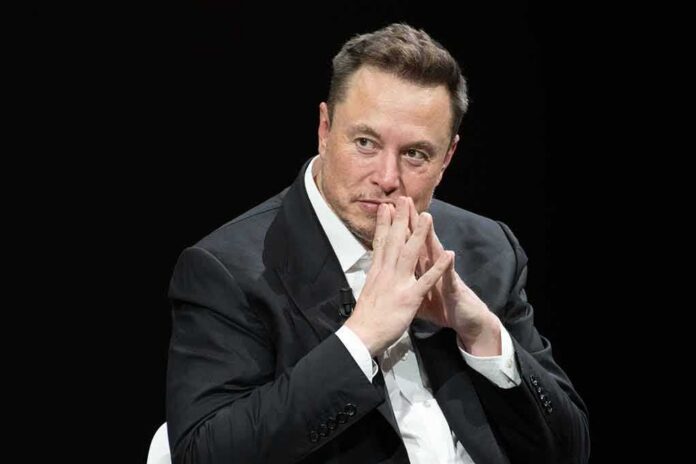
Paramount executives have discussed inviting Elon Musk to join an investor group backing a massive Warner Bros. deal, a move that could put CNN and CBS under the same roof.
Story Snapshot
- Paramount weighed asking Elon Musk to join an equity syndicate for a Warner Bros. transaction.
- David Ellison led the search for fresh capital and considered several wealthy investors.
- The deal framework was reported around $110 billion with $46.7 billion in equity financing.
- Larry Ellison has reportedly guaranteed more than $40 billion of that equity package.
A high-stakes plan to merge giants
Paramount Skydance has been working toward a takeover of Warner Bros. Discovery and lining up major financing to do it. Reports describe a deal near $110 billion, supported by a large equity raise and bank debt. The scale matters because it explains the investor outreach. Bringing in more deep-pocketed partners can reduce risk, strengthen terms, and speed closing. It also sends a signal to lenders and regulators that the combined company can stand up under pressure.
David Ellison has been identified as the executive guiding the effort to secure more cash. Coverage says Ellison considered asking Elon Musk to join a syndicate of equity investors, alongside other wealthy names. The reported goal was to add flexibility to the equity stack as the Warner Bros. transaction moved toward the finish line. The stories do not pin a number to any potential Musk check, but they frame him as one of several possible backers, not the linchpin.
Why Musk’s name matters to this deal
Elon Musk brings capital and clout. His presence in a syndicate would shape market attention and invite scrutiny of news assets that could sit inside the combined company, such as CNN and CBS. Media consolidation already sparks debate; add Musk and the temperature rises. Supporters of lighter regulation and open markets would see a private investor choosing where to put risk capital. That aligns with free enterprise values and the idea that consumers, not bureaucrats, should pick winners.
There is a second edge to the sword. A celebrity investor can also become the story. That can distract from the math that must work in a merger this large. The cash flow has to cover debt, fund content, and compete in streaming and live sports. If the operational plan is tight, famous money helps. If not, famous money cannot fix weak strategy. That is why the reported financing mix, including large commitments from Larry Ellison, may matter more than any single added check.
The financing puzzle: who brings what, and why
Reports say the equity component totals about $46.7 billion, a figure that implies a broad base of investors and firm anchor commitments. Larry Ellison has been repeatedly described as personally guaranteeing more than $40 billion, which positions the Ellison family as the core backer of the equity stack. That level of support can improve loan pricing, attract co-investors, and smooth rating reviews. It also reduces the chance that late-stage shocks derail the deal’s timeline.
Elon Musk could become part of one of the biggest media deals in history.
According to Semafor, Paramount CEO David Ellison has discussed bringing Elon Musk into the investor group backing Paramount’s roughly $111 billion takeover of Warner Bros. Discovery.
• Larry Ellison has…
— TeslaZoa (@TeslaZoa) September 24, 2026
The banks behind mega-deals usually prefer wider syndicates. More equity means lower leverage and more cushion if the cycle turns. For a company with news, film, television, and sports rights, shocks arrive from many directions: strikes, ad slumps, cord cutting, and bid wars for leagues. Spreading risk across several billionaires and funds is common sense. If Musk joined that group, his role would likely be additive, not controlling, based on the reporting to date.
What it could mean for newsrooms and viewers
Putting CNN and CBS under one corporate roof would reshape the news landscape. Shared back-office systems, combined technology, and larger distribution can cut costs and speed product changes. It can also trigger questions about editorial independence. The guardrails that matter are clear lines of authority, transparent standards, and a board that expects a firewall between newsrooms and owners. Strong governance, not social media takes, protects trust in reporting.
Viewers should watch for three markers. First, the structure of the final equity package, which shows who has sway. Second, the content strategy for streaming and sports, where rights drive growth. Third, the plan for local stations and cable networks, which still throw off cash. If these pieces hold, a merged company can invest in better tech, smarter bundles, and clearer brands. If they do not, the combined weight becomes a drag that even cheap capital cannot lift.
The next mile: paperwork, pricing, and proof
The reports establish that Paramount executives discussed asking Musk to join an investor syndicate and that David Ellison led the broader financing push as the Warner Bros. transaction advanced. The exact size or terms of any Musk involvement were not reported. The central test now moves from headlines to documents: commitment letters, loan syndication results, and any regulatory submissions. Deals this large do not hinge on one name; they hinge on whether the numbers clear the bar.
For investors and employees, the signal is simple. Large equity, disciplined leverage, and a clear plan beat hype. If the Ellison-backed package closes near the reported targets, the combined company will start life with runway. If the numbers shrink or drift, the market will exact a price fast. Capital is a scoreboard with no commentary track. It tells the truth when the ink dries.
Sources:
thegatewaypundit.com, finance.yahoo.com, townhall.com
© featuredheadlines.com 2026. All rights reserved.