
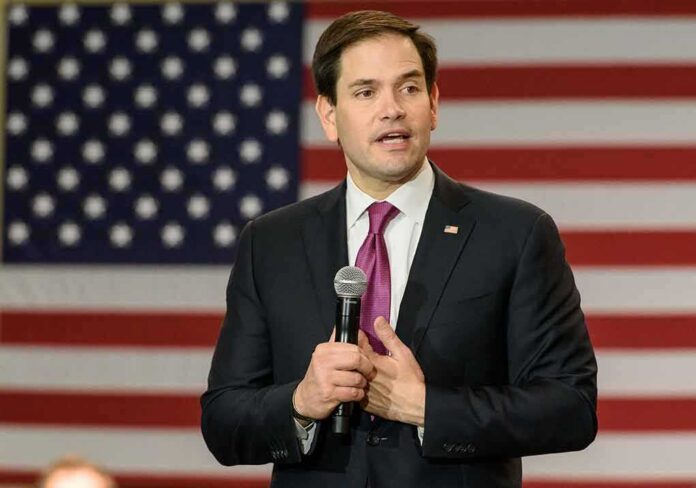
Marco Rubio turned a tense morning interview into a civics class on press access, and he did it without flinching.
Story Snapshot
- Rubio defended President Trump’s new media access policy and rejected claims of a blanket “ban.”
- He argued outlets accused of chronic false reporting do not merit “special access” to White House grounds.
- Reporters from CNN, MS NOW, and Politico were denied entry after Trump’s announcement, sparking a lawsuit.
- The fight now turns on due process and viewpoint discrimination under a key 1977 ruling, not on vibes.
Rubio’s Core Claim: Access Is Earned, Not Owed
Senator Marco Rubio said the White House is not closing any newsroom or silencing anyone. He said the question is special access to federal property, not the right to publish. He backed Vice President J.D. Vance’s line that partisan propaganda should not be rewarded with front-row seats and fast-pass privileges. That framing separates free speech from credentialing. You can speak, write, and broadcast. You do not automatically get a badge and a booth near the West Wing.
Rubio’s tone was firm, not theatrical. He repeated that nothing stops CNN, MS NOW, or Politico from reporting. He said the administration is drawing a boundary around a workspace that it manages for security and order. That aligns with President Trump’s public case that named outlets pushed “fake” and defamatory stories tied to anonymous sources, and that such behavior can raise security concerns inside the complex.
What Actually Happened At The Gate
After Trump announced the change, reporters from the three outlets were turned away at White House entry points and had credentials deactivated. That step made the policy real and immediate, not just a talking point. The outlets then filed suit to restore access and accused the administration of violating the First Amendment. Press groups also echoed that alarm. This is now a courtroom fight, not only a television debate.
Trump also defended the move on camera. He said the stories were fake, that he did not have to host outlets in “the people’s house,” and that some reporters still cover him fairly. He tied his stance to national security and to recent coverage of Iran policy, saying hostile reporting undercut important debates. The White House argument uses clear language about harm, but it has not publicly listed a specific article or breach as the trigger.
The Legal Hinge: Sherrill v. Knight And Due Process
The case does not turn on whether presidents like or dislike coverage. Courts look at process and motive. A 1977 federal appeals decision, known as Sherrill v. Knight, said the White House cannot deny press passes arbitrarily once it opens facilities to the press. It must give notice, a reason, and a chance to respond, and it cannot discriminate based on viewpoint. That is where the lawsuit points its fire.
Rubio’s strongest lane is to keep the focus on standards, not sentiment. If the administration shows a written policy, consistent enforcement, and a security or integrity basis that does not single out views, it gains footing. If it leans on “negative coverage” alone, it hands opponents their best argument. The courtroom will sort that line with emails, memos, and sworn statements.
Conservative Common Sense: Set Rules, Then Stick To Them
American conservative values support tough scrutiny of anonymous sourcing and oppose special perks for partisan spin. They also respect rule of law. That means the White House should map its credential rules to security, accuracy, and professional conduct, publish them, and then enforce them evenly. If an outlet breaks those rules, suspend access with clear notice and an appeal path. That respects both institutional order and constitutional limits.
In overnight court filing, Justice Dept defends Trump White House media ban, arguing some areas of White House are “nonpublic” and that CNN/MSNOW/Politico have failed to maintain basic minimum “standards of professionalism and decorum expected of those given access to the White… pic.twitter.com/ZUQgW8fKrQ
— Scott MacFarlane (@MacFarlaneNews) September 23, 2026
Rubio’s “we’re not closing CNN” line lands because it is concrete and true in scope. The networks still air. Their websites still publish. Their correspondents still roam the city. The conflict is a keyed door in a high-security building. The administration says some badge holders no longer meet standards for entry; the outlets say the standard is their viewpoint. Courts will weigh the record. The side with written process and specific facts will likely win.
Sources:
cnbc.com, ibtimes.sg, scrippsnews.com, aljazeera.com, theguardian.com
© featuredheadlines.com 2026. All rights reserved.