

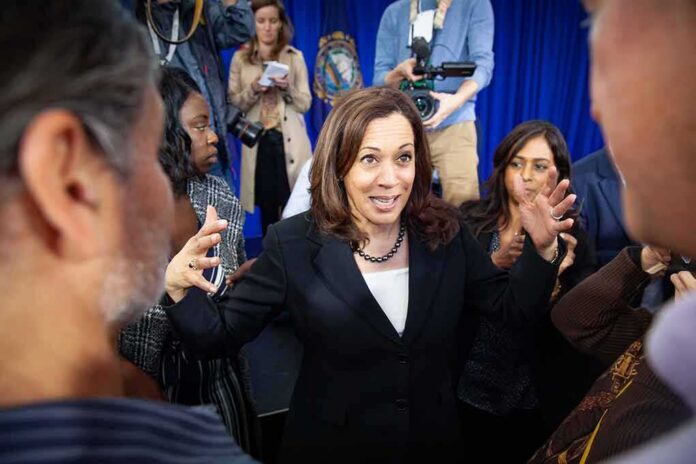
Kamala Harris stepped into Michigan to boost Abdul El-Sayed and center Black maternal health as a turnout engine in a Senate fight that could decide control.
Story Snapshot
- Harris joined El-Sayed in Michigan for a roundtable on Black maternal health.
- Both campaigns tied the visit to voter turnout and Senate control.
- Harris previously endorsed El-Sayed after his August primary win.
- The stop targeted Detroit communities where Harris holds unique clout.
Harris and El-Sayed make turnout and the Senate the headline
Harris’s team said the goal in Michigan was simple: turn out voters in a must-win state and flip the Senate. Her spokesperson linked the trip to lowering prices and opposing Trump, placing the visit inside a kitchen-table frame that Democrats believe moves late deciders. El-Sayed’s campaign echoed that focus. His team called the stop a chance to rally support, sharpen message discipline, and underline a path to a Democratic Senate majority in November.
El-Sayed reinforced the political logic with a local read. He said Harris resonates in Detroit and can energize voters who see her as a model of achievement. That fit matters when surrogates visit. Research on campaign appearances suggests they can nudge county-level vote share when the messenger matches the audience and the issue is clear. The campaign chose a tight frame: maternal health in Black communities, rather than a diffuse rally with many topics competing for attention.
A roundtable with a pointed policy theme
Both sides cast the event as a roundtable on maternal and infant health gaps for Black families, not a standard stump speech. Harris has made that issue part of her public profile, and the campaigns leaned into that history to add weight to the stop. El-Sayed presented the topic as shared ground where he and Harris have both led, a way to turn values talk into a targeted voter-contact moment with practical stakes for care access and costs.
The message design served two ends at once. First, it highlighted hardship that cuts across income lines, which broadens the appeal. Second, it offered a policy-forward lens during a season when many voters filter national news as noise. By talking health outcomes, the campaign tied the Senate race to a clear yardstick for results—safer births and lower costs—rather than abstract promises. That is coalition politics done with a human face.
Endorsement continuity and the Detroit effect
Harris had already endorsed El-Sayed after his primary win, framing him as part of a plan to win a Senate majority and lower everyday costs for Michigan families. That statement gave the Michigan trip narrative continuity and a familiar set of claims about housing, gas, groceries, health care, and child care costs. The repeat message reduced friction for supporters and kept the campaign from scrambling for a new theme every week, which often dilutes turnout work late in a cycle.
Detroit’s political gravity shaped the schedule. Campaigns go where marginal votes live and where a well-known surrogate can change who shows up. Harris’s standing with many Black voters in Detroit raised the ceiling for earned media and volunteer energy around the stop. The political press also made clear the broader map: Michigan sits on the razor’s edge, and the Senate math runs through it. One focused event can ripple across news cycles in-state when the messenger is high wattage.
The strategic bet behind choosing maternal health
The choice of Black maternal health as the centerpiece was not random. It addresses a real problem, blends empathy with policy, and avoids the crossfire of more divisive topics while still signaling seriousness. That is classic surrogate craft. Evidence from political science and campaign case studies shows surrogate visits tend to work best when the pitch is specific, local, and actionable for voters who already lean your way but need a reason to act. This event checked those boxes by design.
Abdul El-Sayed looks uncomfortable as the Michigan Planned Parenthood President asks him to stand up for "black birthing people" at his roundtable with Kamala Harris. pic.twitter.com/Hoe2s8lxzi
— Bioclandestine (@Bioclandestine7) September 23, 2026
Critics may frame the stop as pure turnout theater, but that misses the point. Campaigns exist to drive turnout, define stakes, and win margins at the edges. On those terms, the Harris-El-Sayed plan lines up with common sense: speak to a pressing health gap, tie it to costs families feel, and link it to Senate control where policy gets written. Voters can judge the promises. The facts on the ground are clear: Harris showed up, endorsed the mission, and worked the coalition Michigan will decide.
Sources:
insiderpaper.com, abcnews.com, detroitnews.com, washingtontimes.com, abdulforsenate.com, thehill.com, blackmamasmatter.org
© featuredheadlines.com 2026. All rights reserved.