One January afternoon, the United States quietly hit the brakes on 70 years of postwar globalization with a single memo listing 66 exits.
Story Snapshot
- Trump ordered U.S. withdrawal from 66 international organizations, conventions, and treaties in one sweeping directive.
- The list targets the core infrastructure of global climate policy, including the UNFCCC and IPCC.
- The move crowns a State Department review aimed at rooting out “wasteful, ineffective, or harmful” global bodies.
- Supporters see reclaimed sovereignty and savings; critics see a strategic gift to China and the EU.
A presidential memo that redraws America’s place in the world
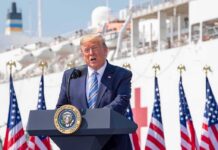
On January 7, 2026, President Donald Trump signed a presidential memorandum instructing every department to begin withdrawal from 66 named international organizations, conventions, and treaties “as soon as possible.” The order is blunt: stop funding and participation in bodies judged “contrary to the interests of the United States,” especially those advancing “globalist agendas” over national priorities.For an American public used to one‑off exits, this is not a tweak; it is a doctrine, put in writing and given a list.
The list reflects a year‑long State Department review ordered in Executive Order 14199 in February 2025, which told officials to catalogue every international organization, convention, and treaty the U.S. touches and recommend which to keep. Secretary of State Marco Rubio’s team emerged calling many institutions “anti-American, useless, or wasteful,” and the president endorsed that judgment with his pen. Supporters hear overdue triage; critics hear an ideologically preloaded verdict disguised as an audit.
The climate architecture at the center of the storm
Buried in the 66 entries are two names that tell you why this matters: the UN Framework Convention on Climate Change and the Intergovernmental Panel on Climate Change. The UNFCCC is the legal foundation for the Paris Agreement and the negotiations that define global climate rules. The IPCC is the gold‑standard scientific body whose assessments shape energy policy, insurance models, and national security planning worldwide. Pulling the U.S. government out of both is not a budget trim; it is a bet that America gains more by standing outside the room than by shaping what happens inside it.
UN climate chief Simon Stiell calls the move a “colossal own goal,” arguing that the United States is walking away from a system it helped build, just as climate damage starts hitting American communities harder. Analysts at the World Resources Institute describe the withdrawal as a “strategic blunder that gives away American advantage for nothing in return,” warning that it hands agenda‑setting power to China and the European Union. From a conservative, common‑sense perspective, that criticism lands hardest where it points to leverage: influence surrendered without a clear, measurable offset in sovereignty or savings.
Beyond climate: 66 levers of soft power and constraint
The memorandum does not stop with climate. It sweeps in UN development funds, peacebuilding bodies, women’s and population agencies, energy and democracy initiatives, and regional compacts on issues from terrorism to digital rights. Historically, Republicans and Democrats alike complained about these forums yet stayed engaged to shape rules and restrain rivals. Trump’s team instead codifies an “America First” view that sees many of them as foreign policy handcuffs—structures that enable activists, bureaucrats, and sometimes hostile states to pressure U.S. lawmakers from the outside.
Rubio and White House officials frame the withdrawals as fiscal and constitutional hygiene: stop subsidizing unelected global bureaucrats, redirect money to domestic needs, and restore policy control to voters rather than Geneva or New York. That argument resonates with conservatives who watched climate, human‑rights, or tax norms drift leftward despite Republican elections at home. Yet the same move also removes friction points that have sometimes restrained China, Russia, and Iran. Critics therefore ask whether Washington is trading imperfect guardrails for a future in which adversaries write more of the rules Americans must still live with through markets, supply chains, and technology standards.
The implementation grind and the coming collision with reality
The memo’s drama masks a slower, messier story now beginning inside the bureaucracy. Withdrawal means different things depending on the legal instrument: formal treaty exit notices, budget cutoffs, or simple nonattendance at meetings. Some compacts require congressional involvement; others allow the president to walk away unilaterally. Agencies from the Pentagon to the EPA must now decide which data streams, alliances, and working groups they can afford to lose, and which they will quietly try to preserve through side channels and bilateral deals.
Domestic blowback has already started. California Governor Gavin Newsom calls the step “brainless,” warning that it “surrenders America’s leadership on the world stage” and hands China an open lane. Climate and security experts argue that while U.S. scientists can still contribute individually to the IPCC, the government loses institutional influence over how risks are framed and which solutions get political traction.[1] From a conservative vantage point concerned with competitiveness and deterrence, the unresolved question is whether sovereignty exercised alone will prove stronger or weaker than sovereignty exercised through forums where the U.S. still holds the biggest vote.