Global elites at the United Nations are pushing a new Palestinian state plan that sidelines Israel’s security concerns and threatens to undermine U.S. sovereignty and constitutional values.
Story Snapshot
- The UN General Assembly passed the “New York Declaration,” reviving the two-state solution and calling for a Hamas-free Palestinian state.
- 142 countries voted in favor, with the U.S. and Israel among just 10 opposed, highlighting deep divisions and growing isolation for Israel.
- The resolution was led by France and Saudi Arabia, demanding an immediate Gaza ceasefire, hostages’ release, and a roadmap for Palestinian statehood.
- Critics warn the plan is one-sided, undermines direct negotiations, and could erode regional stability and American interests.
UN Pushes New Palestinian State Plan Despite U.S. and Israeli Opposition
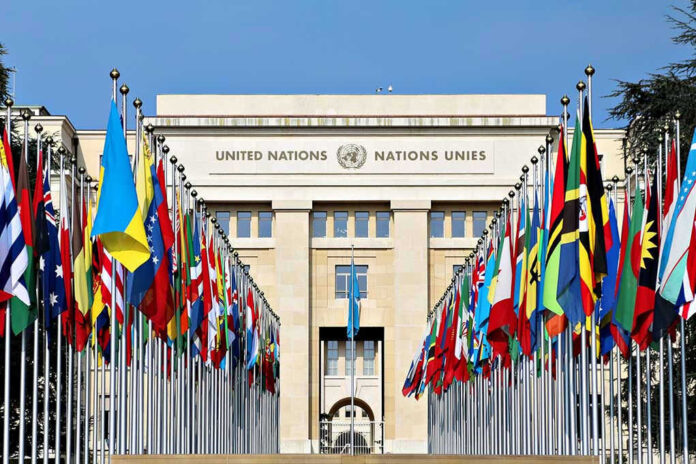
On September 12, 2025, the United Nations General Assembly adopted the “New York Declaration,” a sweeping resolution designed to relaunch the two-state solution for the Israeli-Palestinian conflict. Backed by 142 countries, the measure was spearheaded by France and Saudi Arabia and calls for the establishment of an independent Palestinian state, an immediate ceasefire in Gaza, and the disarmament of Hamas. While proponents claim the roadmap offers a path to peace, Israel and the United States firmly opposed the resolution, citing security concerns and the absence of meaningful direct negotiations.
UN General Assembly votes for Hamas-free Palestinian state ~ "In the context of ending the war in Gaza, Hamas must end its rule in Gaza and hand over its weapons to the Palestinian Authority, with international engagement and support, in line with the objective of a sovereign and…
— Pamela Falk Correspondent United Nations (@PamelaFalk) September 12, 2025
The declaration notably excludes Hamas from future Palestinian governance, aiming to appease Western fears over terrorism. However, critics point out the plan’s heavy-handed internationalism, which bypasses Israel’s security interests and undermines its right to self-defense. The United States labeled the resolution “misguided,” arguing that imposing terms through the UN undermines the principle of sovereign negotiations and sets a dangerous precedent for global governance over national security issues. This approach raises alarms for American conservatives wary of international bodies dictating outcomes that could weaken U.S. support for its allies and erode constitutional protections at home.
Diplomatic Maneuvering and Deepening Divides
France and Saudi Arabia, leveraging their diplomatic clout, orchestrated a high-level conference in New York to draft the declaration. The move signals a coordinated effort by global actors to pressure Israel into concessions, despite years of failed negotiations and ongoing violence in the region. The resolution’s adoption exposes widening divisions in the international community; Israel and a handful of allies now stand largely alone in defending their interests against a global majority. The Palestinian leadership celebrated the vote as a major diplomatic win, but practical barriers to implementation remain, as Israel vows to resist what it views as unilateral impositions that threaten its security and sovereignty.
Conservative observers note that the declaration’s multi-track plan—covering political, economic, legal, and security dimensions—marks a significant shift toward top-down international intervention. This not only challenges the traditional U.S. role as a broker of peace but also risks emboldening anti-Israel elements by sidelining direct talks and offering symbolic victories without concrete guarantees for lasting security. The plan’s demand for disarmament of Hamas without robust enforcement mechanisms further fuels skepticism about its viability and the potential for increased instability in the region.
Implications for U.S. Policy, Security, and Values
The U.S. government’s strong rejection of the resolution reflects broader concerns about globalist overreach and the erosion of American sovereignty. By allowing the United Nations to dictate terms, critics argue, the resolution undermines the core principles of self-determination and constitutional governance that conservatives hold dear. The situation also draws attention to the potential for future U.S. administrations to face mounting international pressure to accept policies that conflict with national interests, traditional alliances, and foundational values such as the right to self-defense and secure borders.
For families and patriots concerned with unchecked global institutions, the UN’s push for a Hamas-free Palestinian state raises red flags about future efforts to bypass the will of the American people and their elected leaders. The declaration’s adoption, while symbolically powerful for its supporters, does not guarantee practical change on the ground. Implementation will depend on further diplomatic maneuvering and the willingness of key stakeholders to engage—an unlikely prospect as long as core security concerns are ignored. The ongoing debate underscores the importance of vigilance against international moves that threaten American values and constitutional protections, reinforcing the need for strong leadership committed to sovereignty, stability, and the defense of traditional principles.
Sources:
UN press release: General Assembly Endorses New York Declaration for Two-State Solution
UNifeed: General Assembly Adopts New York Declaration on Palestinian Statehood
Jerusalem Post: Israel condemns UN vote for Palestinian state
US Mission to the UN: Explanation of Vote on the UNGA Resolution Endorsing the New York Declaration