

featuredheadlines.com — A young trucker high on drugs, a wall of brake lights on a Southern California freeway, and three families shattered in seconds have turned one crash into a referendum on borders, bureaucracy, and whether anyone in charge still knows how to say “no.”
Story Snapshot
- Police say 21-year-old truck driver Jashanpreet Singh caused an eight-vehicle crash that killed three people on Interstate 10 near Ontario, California.
- Federal officials say he is an Indian national who crossed the southern border illegally in 2022 and remains in the United States without lawful status.[2]
- Prosecutors charged him with gross vehicular manslaughter while intoxicated and drug-related driving offenses after toxicology tests showed impairment.[2]
- The case exposes how immigration failures, lax enforcement, and commercial licensing loopholes can converge in one catastrophic moment.[2][3]
From Routine Traffic Jam To Fireball Crime Scene
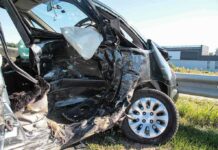
Drivers on Interstate 10 east of Los Angeles did what everyone does in Southern California: they crawled into a traffic jam and waited it out. According to California Highway Patrol investigators, Singh, driving a semi-truck, never hit the brakes before plowing into the line of vehicles near Ontario.[2] The impact triggered an eight-vehicle chain reaction involving four commercial trucks, killed three people, and sent four others to hospitals in varying condition.[1][2] Dashcam-style images from the aftermath look less like a fender bender and more like a war zone.
Authorities say toxicology tests confirmed Singh was under the influence of drugs at the time of the crash.[1] Prosecutors in San Bernardino County responded with serious charges: three counts of vehicular manslaughter with gross negligence, allegations of gross vehicular manslaughter while intoxicated, and driving under the influence of a drug causing injury.[2] Jail records cited in local reporting show Singh held at West Valley Detention Center on a substantial bail, a clear sign the justice system treats this as a major criminal case, not a tragic mishap.[2]
How An Illegal Border Crossing Turned Into A CDL And A Catastrophe
Federal officials quoted in multiple reports say Singh’s story did not begin behind the wheel—it began at the southern border.[1][3] According to those sources, Border Patrol agents first encountered Singh in the El Centro Sector of California in March 2022 after he crossed from Mexico.[3] Rather than return him promptly to his home country, they released him into the interior of the United States pending immigration proceedings, under alternatives-to-detention policies advanced by the current administration.[1][3]
Department of Homeland Security and Immigration and Customs Enforcement officials later told reporters that Singh is not in lawful immigration status and that agents lodged an immigration detainer after his arrest.[2] Those are not terms bureaucrats use lightly; detainers are requests to local jails to hold an individual for federal pickup because the government believes they are removable under immigration law. The weakness in the public record is that the underlying immigration file, court docket, and encounter forms are not yet public, so the public sees assertions summarized by media rather than primary documents.[2][3]
Licensing, English Proficiency, And The State-Federal Blame Game
The I-10 crash quickly collided with a second controversy: how a person who, according to federal officials, lacked lawful status ended up with a valid California commercial driver’s license in the first place. California authorities confirmed Singh held a legitimate commercial license at the time of the crash.[3] Advocates for tighter enforcement argue this exposes gaping holes in how states verify legal presence, work authorization, and English proficiency for high-risk professional drivers operating forty-ton vehicles around American families every day.
Federal transportation officials, under growing pressure, pointed back at the states. The Federal Motor Carrier Safety Administration announced it would scrutinize whether states like California, Washington, and New Mexico are truly enforcing the federal rule that commercial drivers must read and speak English well enough to converse with the public, understand signs, respond to officers, and make accurate entries on required reports.[1] Officials warned that states have thirty days to prove compliance with these standards or risk their federal motor carrier safety assistance funding.[1]
One Crash, Two Narratives, And A Larger Warning
The Singh case sits at the intersection of two powerful narratives. One camp says, in essence: a young man drove impaired and killed three people; his immigration status is a distraction. That argument leans on a valid evidentiary point: nothing in the current public record proves that Singh’s illegal status directly caused the crash, as opposed to his alleged drug use and negligence.[2] From a narrow courtroom perspective, the manslaughter charges would look the same if he had been a citizen.
The other camp argues that immigration status, border policy, and state licensing rules are not side issues but upstream risk factors. From that vantage point, the chain looks like this: a foreign national crosses the southern border illegally, is released into the country instead of promptly removed, acquires a commercial license despite questionable status, then allegedly drives a semi-truck while on drugs and kills three Americans.[1][2][3] That chain does not prove intent, but it does show how layers of leniency can stack into lethal consequences.
Sources:
[1] YouTube – Illegal immigrant trucker arrested after crash leaves three dead
[2] Web – Semi-truck driver arrested in deadly crash on Southern California …
[3] Web – Illegal immigrant trucker accused in fatal California crash released …
© featuredheadlines.com 2026. All rights reserved.