
Federal prosecutors say 28 lawful permanent residents lied about being citizens to register and, in many cases, vote in California elections—some over multiple cycles.
Story Snapshot
- Justice Department charged 28 foreign nationals, all lawful permanent residents, not citizens.
- Allegations include fraudulent voter registration and false statements on naturalization forms.
- Officials say 21 of the 28 are suspected of casting ballots, some in multiple elections.
- A highlighted case alleges voting in 2020, twice in 2022, and again in 2024 by one defendant.
What Prosecutors Filed And Why It Matters
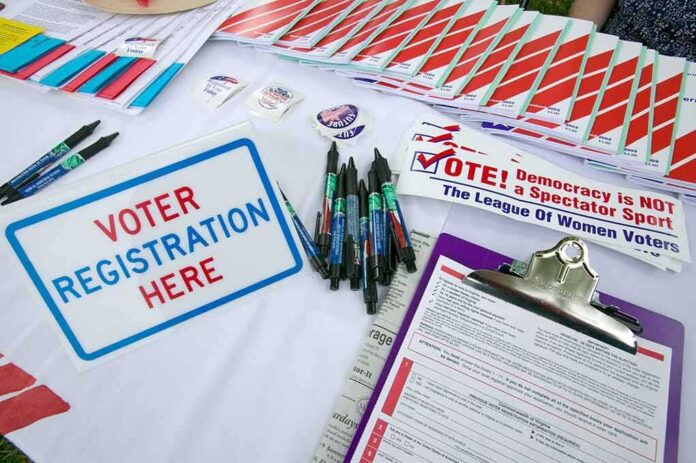
The Department of Justice announced charges against 28 foreign nationals in California, all identified as lawful permanent residents who are not allowed to vote in United States elections. Prosecutors charged fraudulent voter registration and making false statements on naturalization applications. Each charge carries up to five years in prison if convicted. The government says court documents show defendants checked the citizen box under oath to get on the rolls. That is the crux: a sworn claim of citizenship that unlocks a ballot.
One case anchors the narrative. Prosecutors say Omar Alexander Muñoz, a 72-year-old from Belize, registered in 2019, claimed he was a citizen, and voted in 2020, in two 2022 elections, and in 2024. They also allege he later made a conflicting statement under oath in his citizenship paperwork. Local coverage confirmed the federal operation and repeated the voting sequence attributed to Muñoz. This kind of timeline moves the story from theory to trackable events a jury can test.
How Many Allegedly Voted Versus Only Registered
The numbers split into two buckets: registration and voting. The Department of Justice announcement centers on registration fraud and false statements. The Los Angeles Times reported that 21 of the 28 defendants are suspected of actually casting ballots, including some who voted in multiple elections. That matters because voting as a noncitizen and lying to get on the rolls are distinct acts. The first corrupts the count; the second builds the path to do it.
ABC7’s reporting aligns with federal claims about the size of the operation and the core Muñoz timeline. The Justice Department’s local filing outlines arrests and the charge set, again focused on false statements and illegal registration, with voting allegations tied to specific individuals. Together these sources establish that a targeted operation led to charges against people who, by the government’s account, were not citizens at the time and yet entered the system and, in many instances, cast ballots.
The Counterpoints And What They Actually Challenge
Some defendants told reporters they do not remember registering to vote, which disputes intent and knowledge, not the legal rule itself. A state official argued that 28 arrests are small next to about 23 million California voters, which is true on scale but does not excuse individual violations. A county leader called the operation voter intimidation, an accusation about tactics, not the evidence in each case. A federal prosecutor reportedly said the list of suspected noncitizen registrants is not foolproof, and that not all on it voted. That concedes screening error risk but not the specific charged conduct.
Update: DOJ's noncitizen-voting push now spans three states: 5 charged in northern New York and a Canadian green-card holder in Idaho, accused of voting in the 2022 general, on top of the 10 North Carolina indictments. All are charges, not convictions.
— Frontier Signal (@FrontierSigHQ) October 17, 2026
Fair-minded readers should insist on due process. Charges are allegations. Guilt must be proven case by case. Still, the facts the Department of Justice put forward are concrete enough to merit attention. American conservative values place a high bar on election integrity and the rule of law. That means two things at once: protect lawful voters from dilution, and protect defendants from trial by headline. The right response is verification, not spin—release forms, timelines, and sworn records so the public can see the chain of proof.
What Comes Next And The Tests That Will Settle It
Courts will examine four key questions. First, whether each defendant was a noncitizen on the date of registration and any vote; the records from the Department of Homeland Security and United States Citizenship and Immigration Services will decide that. Second, whether the person knowingly claimed citizenship; the signed registration form and language on the oath matter most. Third, whether ballots were issued and counted in named elections; county voter history and envelope records will answer that. Fourth, whether statements on naturalization forms conflict with earlier claims. Clear answers on those points will either sustain or sink each charge.
Sources:
redstate.com, justice.gov, yahoo.com, newrepublic.com, latimes.com, electionlawblog.org
© featuredheadlines.com 2026. All rights reserved.