

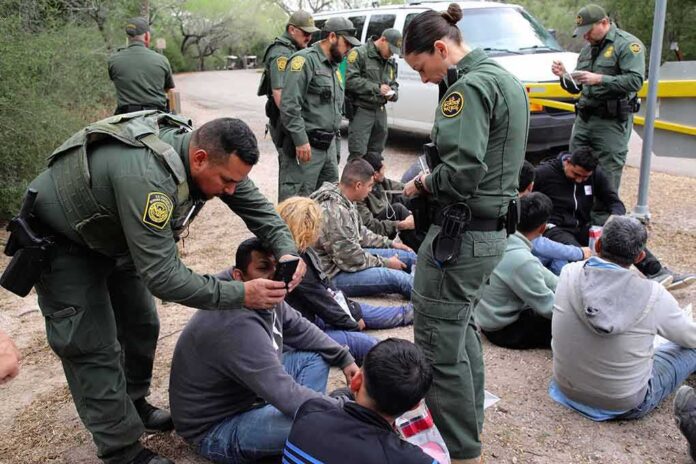
An 8-year-old walked into a routine immigration check-in and ended up flown to Texas—because the adult with him could not prove legal guardianship.
Story Snapshot
- DHS said the man with the child could not prove legal guardianship under anti-trafficking law.
- Officials then classified the child as “unaccompanied” and sent him to the refugee office’s care.
- Local leaders said school records listed the uncle as the child’s contact and caregiver.
- After public outcry, the child returned home to his San Diego community.
What Triggered Federal Custody at a Routine Check-In
Department of Homeland Security officials said the boy’s accompanying adult, described as an uncle, could not show legal guardianship that met requirements in the Trafficking Victims Protection Reauthorization Act. That failure changed everything. Agents then treated the child as an “unaccompanied” minor and moved him to the Office of Refugee Resettlement, the federal system that houses children without a verified parent or legal guardian in the United States. Separate reports confirm the custody action began at a scheduled immigration appointment.
Federal officials framed the move as a safety step, not punishment. They said they removed the child from the household to protect him while they sorted out who had legal authority to care for him. They pointed to the anti-trafficking law’s standards and said the uncle’s papers did not clear that bar. They also disputed that the child was “detained” in the way adults are, stressing that he was placed in child-centered care rather than a jail setting.
Why “Unaccompanied” Status Changes Everything
Federal practice treats a child as “unaccompanied” when no parent or legal guardian in the United States can take custody. That can apply even if a relative stands beside the child. Once that label is applied, the law directs a transfer to the Office of Refugee Resettlement within a short window. The agency then screens possible sponsors and reviews safety concerns before release. Government oversight reports describe this framework and its strict timelines.
That system aims to protect children from trafficking, fraud, and abuse. But it can separate kids from stable homes when paperwork lags behind real life. Relatives with long caregiving roles may lack formal court orders. Schools may recognize those adults as caregivers, but school files are not the same as a legal guardianship decree. The tension between safety checks and family unity sits at the core of this case—and many others like it.
The San Diego Backlash and the Texas Transfer
Community leaders and advocates pushed back right away. They said the man is the boy’s biological uncle and has cared for him for years. San Diego Unified School District said records listed the uncle as the student’s point of contact and showed they shared a last name. Those facts do not prove guardianship, but they undercut any idea that the adult was a stranger. The distance made anger worse when reports said the child was held in Texas, far from his school and friends.
The specific reason the 8-year-old Haitian boy in San Diego was taken into federal custody during his ICE appointment comes down to a conflict between legal guardianship rules under immigration law and the loss of his legal status:
1. Lack of Formal Legal Guardianship
* The boy…— ArrowTo your Ego (@Arrrowtoyourego) November 10, 2026
Representative Juan Vargas said the child’s separation caused distress and praised his return home. A letter from local officials said the district sent crisis counselors to the boy’s elementary school to help anxious classmates. The public reaction was not about obscure legal terms. People saw a third grader vanish from class and reappear across the country. That gap between legal process and human cost drove the outcry that followed.
Plain Questions the Government Still Needs to Answer
Officials did not say which exact documents the uncle presented or why they failed. They did not explain whether officers tried to reach the child’s parent or other relatives the same day. They did not show why a same-day removal and out-of-state transfer beat a short pause to verify family ties through schools, local agencies, or a family court. Those details would show whether the safety logic matched the facts on the ground.
Conservative common sense says protect the child first, then keep family bonds when safe to do so. That balance requires fast, local verification and clear rules that any caregiver can understand. If the law makes “no paper, no child” the default, then the agencies must offer quick paths to fix paperwork before a child gets shipped away. Safety checks should be tight, but not blind to real homes that function and care well.
What Fixes Could Prevent the Next Outcry
First, publish a simple guardianship checklist in multiple languages, and accept a broader set of proof with same-day supervisor review. Second, require local verification before removal when a child is in school and has a known caregiver, except for clear safety red flags. Third, keep school-aged children in their home region unless a judge orders otherwise. None of this weakens child safety; it makes it smarter and more anchored in the child’s real life.
The child is now back with family in San Diego, and that is the right ending for this story. The next test is whether the system learns. The government can defend strong safeguards against trafficking and still respect stable homes proved by more than one kind of paper. Children belong close to their people and their classrooms, and the rules should show that—without giving predators a single inch.
Sources:
nbcsandiego.com, newsweek.com, idahonews.com, nbcnews.com, people.com, fox5sandiego.com, cbs8.com, timesofsandiego.com, charlotteobserver.com, abc13.com, vargas.house.gov
© featuredheadlines.com 2026. All rights reserved.