Nobody saw it coming: the Secretary of State just declared that Nicolás Maduro is no longer the President of Venezuela—he’s now officially the head of a narco-terrorist cartel, and the U.S. is tightening the screws harder than ever before. What happens next in Venezuela could send shockwaves around the world—and right here at home.
At a Glance
- The U.S. no longer recognizes Nicolás Maduro as President of Venezuela, calling him the leader of a narco-terrorist cartel.
- The July 2024 Venezuelan election was declared fraudulent by independent tallies and international observers.
- The U.S. and EU have imposed new sanctions and increased rewards for information leading to Maduro’s arrest.
- The opposition, led by Edmundo González and María Corina Machado, is officially recognized by the U.S. and Europe—but remains brutally suppressed by the regime.
U.S. Draws a Red Line: Maduro Out, Narco-Terrorist Label In
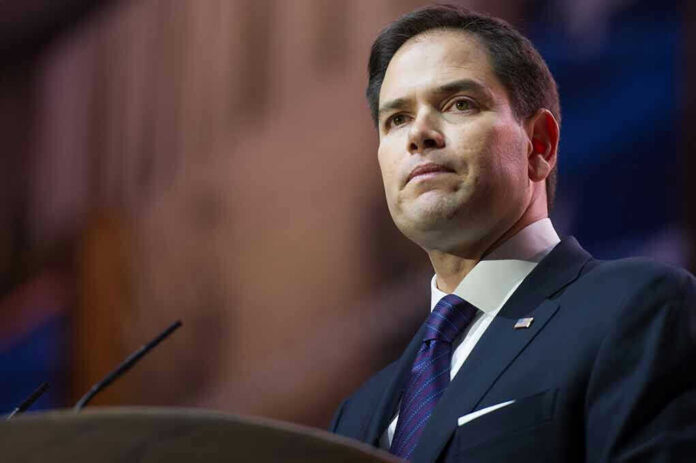
In a move that would have been unthinkable just a few years ago, U.S. Secretary of State Marco Rubio has drawn a bright red line in the sand: Nicolás Maduro is not the President of Venezuela. According to Rubio, Maduro is now officially recognized by the U.S. government as the head of a narco-terrorist cartel—a stunning escalation that leaves little doubt about where America stands. This declaration comes after the July 2024 Venezuelan election was exposed as an outright sham. Independent observers and parallel vote counts revealed that opposition candidate Edmundo González won in a landslide, yet Maduro’s regime—propped up by loyalists and the military—cooked the books and claimed victory anyway.
These aren’t just words. The U.S. has ramped up sanctions, slapped travel bans on Maduro’s cronies, and increased the bounty for information leading to his arrest. The European Union has joined in, refusing to recognize the legitimacy of Maduro’s regime. The international isolation is growing, and the message is clear: America won’t play footsie with dictators who trample democracy, rig elections, and poison their own people with drugs and terror.
Venezuela’s “Election”: A Masterclass in Fraud and Repression
The 2024 Venezuelan presidential election wasn’t an election at all—it was a circus, a rigged contest that would make even the most corrupt banana republic dictator blush. Maduro’s so-called “victory” came courtesy of a National Electoral Council stacked with regime loyalists and a campaign of intimidation, censorship, and outright violence against opposition supporters. Independent tallies—covering 85% of polling stations—showed Edmundo González winning by a landslide, but the regime simply declared Maduro the victor with barely 52% of the vote. The fraud was so blatant, so naked, that even the European Parliament scheduled special sessions to denounce what they called Maduro’s “illegitimate reign.”
While the world watches, Venezuela’s opposition leaders, including González and the fearless María Corina Machado, continue their struggle under constant threat. Over 1,600 political prisoners languish in jail. Sanctions keep piling up, but Maduro’s grip on the military and security services keeps him in the presidential palace—for now. The U.S., the EU, and freedom-loving people everywhere are making it clear they won’t legitimize a narco-dictator who turns the machinery of government into a criminal empire.
The Human Cost: Repression, Exodus, and a Nation on the Brink
The price of tyranny in Venezuela isn’t measured just in political headlines. It’s measured in the lives of ordinary people—millions driven into poverty, families torn apart, and over seven million Venezuelans forced to flee the country since 2015. The economy is in freefall, shelves are bare, and hyperinflation has wiped out savings. The social fabric, once vibrant, is now threadbare under the weight of repression and hardship. Meanwhile, the regime’s entanglement with drug cartels and criminal networks has turned Venezuela into a launchpad for regional instability. The U.S. has responded by increasing rewards for information leading to the arrest of Maduro and his inner circle, doubling down on sanctions, and closing the door on any hope of international legitimacy for the regime.
For the opposition, international recognition is cold comfort. While the world cheers their courage, the ground reality in Caracas is brutal: dissent is crushed, civic space shrinks daily, and the regime’s security forces patrol the streets with impunity. Without sustained, coordinated international pressure—and a willingness to call evil by its name—Venezuela risks slipping even further into chaos. The United States, at least for now, has finally decided to stop pretending that “dialogue” with a drug kingpin masquerading as a president is anything but a sick joke.
Global Stakes: Why This Matters for America’s Future
What happens in Venezuela doesn’t stay in Venezuela. As the regime collapses into a criminal enterprise, regional security, American interests, and the very idea of democracy in our hemisphere are at risk. The flood of refugees, the spread of drugs, and the threat of a narco-state on America’s doorstep demand bold, principled action. The Biden years of appeasement and diplomatic double-talk are over. The time for clarity is now: America stands with the people of Venezuela, not with the thugs and traffickers who have hijacked their nation.
As Secretary Rubio put it, the United States will not rest until democracy is restored and the Maduro cartel faces justice. The world is watching. The question is whether we have the resolve to see this fight through—to defend freedom abroad, and in the process, protect it here at home.
Sources:
WOLA: Venezuela: Democratic Resistance, Challenges and Prospects 2025
Freiheit.org: Electoral Fraudster President Venezuela
European Parliament: Venezuela Parliament to Condemn Nicolás Maduro’s Illegitimate Reign
U.S. Embassy Chile: Condemning Maduro’s Illegitimate Attempt to Seize Power in Venezuela