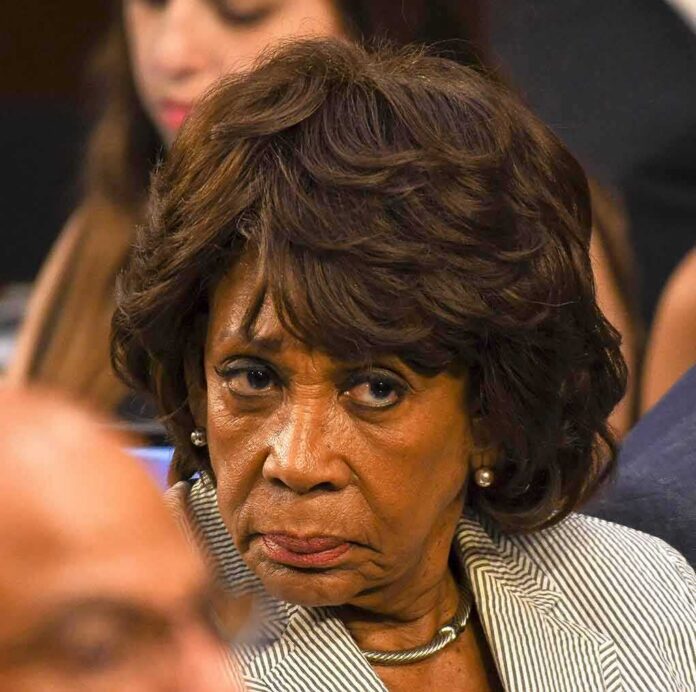
Maxine Waters said the “white media” is pushing Democrats to fight with socialists to juice ratings, and that charge exposes how conflict sells and why it keeps coming back.
Story Snapshot
- Rep. Maxine Waters blamed “white media” for stoking Democratic infighting.
- Public sees media as worsening political division, but intent is unproven.
- Research shows conflict framing grabs attention and drives engagement.
- Polling finds Democrats trust the press far more than Republicans do.
What Waters Alleged And Why It Landed
Rep. Maxine Waters claimed that the “white media” encourages fights between establishment Democrats and the Democratic Socialists of America. A conservative outlet summarized her point as a ratings play by the press. The wording is charged. The charge also follows a long pattern: when a party faces a noisy family feud, someone blames the messenger. The claim hits a nerve because conflict clearly draws clicks and viewers in modern news markets.
Evidence that audiences reward drama exists across decades of coverage. Research and industry reporting show viewers surge during intense or divisive events. That incentive shapes story choice and tone even without a secret plan. The question is intent. Waters says the media is doing it on purpose to split Democrats. That is hard to prove with public data. The simpler reading is structural: conflict is a repeat winner, so outlets keep booking it.
What The Public And Research Actually Show
Surveys show most Americans think the news media makes political division worse. One analysis cites a figure in the mid-seventies who see the press as increasing splits. That supports a perception problem but not a smoking gun of intent. Broader work finds that conflict framing in news reliably gets attention and can mobilize people to talk about politics. Scholars define conflict frames as stories that stress fights between groups to catch interest.
News routines also push toward drama. Reporters chase debate, stakes, and contrast. That approach signals relevance to the audience and fits time-crunched formats. Researchers describe how journalists can amplify conflict through language, selection, and how they stage segments. None of this proves a plot to fracture one party. It does show why conflict inside any party gets airtime. It is cheap to produce, easy to understand, and sticky to watch.
How Partisanship Colors Trust And Blame
Democrats and Republicans do not see the press the same way. Surveys from the Pew Research Center find Democrats are far more likely to trust journalists and to back a watchdog role, while Republicans report deep skepticism. That gap shapes how claims like Waters’ will land. Her base may hear a cultural critique of who sets the narrative. Conservatives will hear a dodge that blames coverage instead of ideas. Both reactions flow from prior beliefs, not new facts.
Policy fights inside the left also raise the stakes. If leaders sense a split could cost races, attacking the referee is cheaper than reconciling platforms. From a conservative lens, the claim falls short because it shifts blame from choices to coverage. Personal responsibility says own your messages, stop chasing fringe applause, and make a clear case to voters. Ratings pressure is real, but voters can tell when a party ducks hard questions by shooting the messenger.
Ratings Reality Without The Conspiracy
Viewers reward fast, vivid conflict. That is why war spikes cable news numbers and why panel fights go viral. Outlets compete for attention in a crowded market where seconds matter. The clean insight is this: media incentives and party incentives often clash. News wants a fight that fits a segment. Parties want unity that lasts a cycle. When a Democrat and a socialist trade barbs, cameras roll. That is not proof of a plan to divide; it is proof of supply meeting demand.
Maxine Waters Claims the ‘White Media’ is Trying to Divide Democrats for Ratings | Mike LaChance, The Gateway Pundit
Rep. Maxine Waters recently told followers that the Democrats are doing ‘pretty good’ with regards to the midterms, before warning people that when it comes to… https://t.co/U97vQRjjqP
— Owen Gregorian (@OwenGregorian) September 1, 2026
Waters’ charge about “white media” drags identity into a ratings debate and muddies the point. The better question is whether coverage is fair and proportional to facts. Research reviews on bias show mixed results across elections, not a clear tilt to one side. The most reliable through-line is the power of conflict framing. If Democrats want less of that, stop feeding it. If the press wants more trust, dial back the heat and raise the light—facts first, fights second.
Sources:
analysis.limitedgov.org, congress.gov, en.wikipedia.org, waters.house.gov, thedailybs.com, politico.com
© featuredheadlines.com 2026. All rights reserved.