
President Trump says he has approved new fuel economy rules that scrap the Biden administration’s push toward electric vehicles and cut required mileage targets for gas-powered cars and trucks.
Story Snapshot
- Trump says he approved new fuel economy standards ending the Biden-era electric vehicle mandate, claiming the change will lower car prices and boost American manufacturing.
- The Biden rule required a 2% yearly fuel efficiency gain for cars and a 20% jump for trucks through 2031, before the new plan cuts the 2031 passenger car target from 50.4 mpg to 34.5 mpg.
- Transportation Secretary Sean Duffy called the Biden-era standards illegal, saying the last administration wrongly factored electric vehicle adoption into rules written for gas-powered cars.
- Environmental groups and 19 state attorneys general say the rollback will raise gas costs and pollution, while automakers wait on final details of the new mileage math.
What Trump Announced And Why It Matters To Drivers
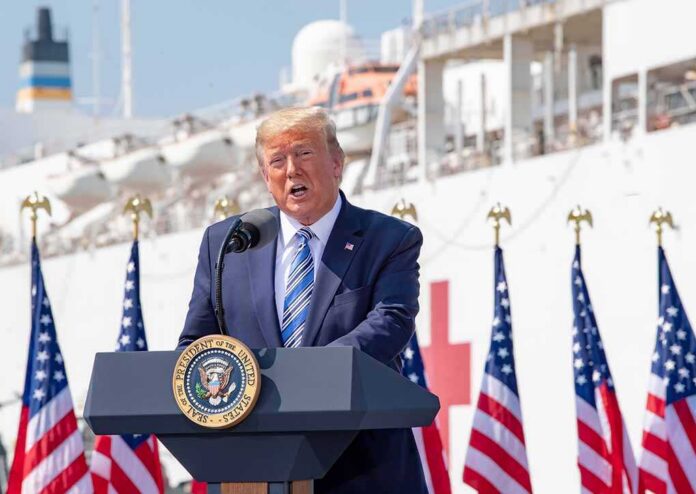
Trump told reporters Saturday he approved new fuel economy standards that end what he calls the Biden administration’s electric vehicle mandate. He said the change would lower car prices and support American auto manufacturing. The announcement builds on months of groundwork from his Transportation Department, which spent this year unwinding the mileage rules Biden finalized in June 2024.
The numbers show the size of the shift. Biden’s rule pushed automakers toward a fleet-wide average near 50.4 miles per gallon by the 2031 model year. The Trump administration’s revision drops that target to 34.5 mpg, a cut of nearly one-third.
Duffy Says The Old Rule Broke The Law
Transportation Secretary Sean Duffy has led the charge, calling the Biden-era standards illegal months before Trump’s Saturday announcement. Duffy argues the previous administration overstepped its authority by baking electric vehicle adoption into fuel efficiency math meant for gasoline-powered cars and trucks. Duffy signed an order in January directing the National Highway Traffic Safety Administration to begin unwinding the rule almost as soon as he took office.
That agency’s June rule did not change existing standards on its own. Instead, it gave the Transportation Department legal cover to write fresh numbers in the months ahead, which is what culminated in Saturday’s announcement. Supporters see this as simple accountability: an agency admitting a prior rule exceeded its legal reach and fixing it, rather than leaving automakers stuck with mandates built around a technology many buyers still are not choosing.
Critics Warn Drivers Will Pay More At The Pump
Environmental groups reject the administration’s framing entirely. Earthjustice Legislative Director Corey Solow said reversing the fuel economy standards moves the country in the wrong direction, forcing families into less efficient vehicles and higher gas bills during an already tight household budget season. Climate Mayors’ leadership echoed that fuel economy rules have long helped cut costs and clean up air quality across American cities.
Nineteen state attorneys general, along with governors and mayors in states where electric vehicles are gaining ground, have issued formal objections to the rollback. Health and medical organizations sent NHTSA a joint letter urging the agency to withdraw the proposal outright, calling it deeply flawed. These are real, named objections worth weighing, even if they come from groups predisposed to favor stricter mandates in the first place.
This Fight Has Happened Before And Will Happen Again
Nothing about this moment is new. Fuel economy standards have swung back and forth for two decades, tightened under Obama, loosened under the first Trump term, then tightened again under Biden. Each side uses the same statutory playbook to justify opposite outcomes, arguing over technology costs, fuel prices, and how much weight to give the social cost of carbon.
That history matters because it shows this rollback is not some radical break from precedent, it is the latest lap in a well-worn cycle. Whichever party controls the White House rewrites the mileage math to match its priorities, and courts frequently get pulled in to referee the fight. Automakers, meanwhile, are left designing vehicles years in advance without knowing which rules will still stand by the time those cars roll off the line.
🚨🚨 BREAKING 🚨🚨:
TRUMP APPROVES NEW FUEL ECONOMY STANDARDS: “BIG DAY FOR AMERICAN AUTO WORKERS AND CAR BUYERS!”
President Trump says the new standards will roll back Biden-era fuel economy requirements and give automakers more flexibility over the vehicles they build.
— R J (@rahuljaitley) September 27, 2026
Trump’s team frames the new standards as a return to legal footing and consumer affordability, promising the changes could shave close to a thousand dollars off the price of a new car. Opponents call it a costly step backward for air quality and climate goals. Automakers now wait for NHTSA to finalize the numbers, while the broader argument over who controls America’s roads rolls on much like it always has.
Sources:
ww2.arb.ca.gov, abcnews.com, foxbusiness.com, cbsnews.com, environment.yale.edu, climatechangeresources.org, congress.gov, clf.org, nonprofitquarterly.org
© featuredheadlines.com 2026. All rights reserved.