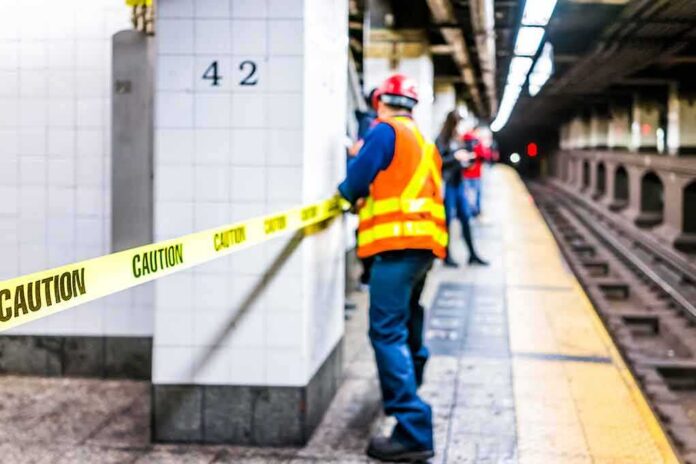
A days-old body lay behind a locked subway utility door in East Harlem as trains rumbled past.
Story Snapshot
- An MTA track worker found a dead man in a utility closet near 125th and Lexington.
- Police said there were no visible signs of trauma and no suspected foul play so far.
- Emergency Medical Services pronounced the man dead at the scene around late morning.
- The man, believed to be in his 20s, had not been identified at the time of reporting.
Body found during active work near 125th and Lexington
A Metropolitan Transportation Authority track worker discovered a man’s body around 11 a.m. Saturday inside a utility closet in a subway tunnel serving the No. 6 line at 125th Street and Lexington Avenue in East Harlem, according to a published account that cited law enforcement. The worker was on an active project at the station when he opened the closet. Police said Emergency Medical Services arrived and pronounced the man dead at the scene. Authorities said the man appeared to be in his 20s.
Police said there were no visible signs of trauma on the body and they did not suspect foul play based on the initial scene. Investigators believed the body had been in the closet for several days, according to the same report. Detectives secured the area, logged the location inside the tunnel, and notified the Office of Chief Medical Examiner. Officials had not released the man’s name by publication time. The Medical Examiner will determine the cause and manner of death.
How a body can go unseen in a busy system
Subway tunnels, side passages, and utility rooms sit behind locked doors and away from riders. Crews reach them on set schedules, so discovery often comes when maintenance or inspection teams open spaces that have been quiet for days. Prior cases show why timing and access matter. Workers in Lower Manhattan found a burned, decomposed body deep in a tunnel during a night track inspection, a scenario that also kept riders unaware until staff entered the area hours later.
Track areas hold hazards that can hide the cause of death until autopsy. People struck by trains, injured in falls, or trapped in off-limits spaces may show little external trauma, especially after time passes. In other New York cases, early field notes differed from later Medical Examiner findings once internal injuries or toxicology were known. One West Village discovery that began with a simple track find later showed sharp-force wounds, changing the case path and the public frame.
What police said and what comes next
Police statements here were measured and clear: no visible trauma, no suspected foul play, and a man believed to be in his 20s found in a utility closet near the No. 6 line tunnel in East Harlem. That aligns with common sense and conservative values on policing: move fast, report facts, hold judgment for the coroner. The next firm answers will come from autopsy and toxicology. Those tests resolve most disputes about natural causes, accidents, or other non-traumatic deaths in closed spaces.
Transit managers will also pull logs on door access, planned work, and last inspections. Those basics matter more than hot takes. They show who had keys, when the space was checked, and whether alarms or camera views covered the door. In prior incidents, routine reviews of work orders and access logs helped narrow the time window and rule out tampering. That process protects crews, preserves evidence, and respects the deceased’s family while the city waits for medical findings.
The sobering pattern behind rare headlines
These cases are rare by the scale of daily rides, but they repeat across years in familiar ways. A system with miles of tunnels will sometimes hide tragedy until a worker opens a door. Some findings end as accidents linked to trespass on the right-of-way. Others involve medical events where the person sought shelter in a quiet room and never recovered. News coverage often blends very different events into one bucket, which can blur how each case really happened.
Best practice is simple and firm. Treat every tunnel death like a potential crime until the Medical Examiner rules. Share clear facts without spin. Respect that “no visible trauma” is a field note, not a final verdict. The East Harlem discovery fits that disciplined playbook so far. A worker opened a door, called it in, and police secured the scene. Now the science speaks. When it does, New York will learn how a young man ended up behind that door, and what should change to prevent the next one.
Sources:
nypost.com, pulse2.com, fox5ny.com
© featuredheadlines.com 2026. All rights reserved.